<?xml version="1.0" encoding="UTF-8"?>
<?xml-stylesheet type="text/xsl" href="/stylesheets/feed.atom.xml" media="screen"?>
<feed xml:lang="en-US" xmlns="http://www.w3.org/2005/Atom">
  <id>tag:asia.nd.edu,2005:/news</id>
  <link rel="alternate" type="text/html" href="https://asia.nd.edu"/>
  <link rel="self" type="application/atom+xml" href="https://asia.nd.edu/news.atom"/>
  <id>tag:asia.nd.edu,2005:/latest</id>
  <title>Liu Institute for Asia and Asian Studies | News</title>
  <updated>2026-11-04T15:55:00-05:00</updated>
  <link rel="alternate" type="text/html" href="https://asia.nd.edu/"/>
  <link rel="self" type="application/atom+xml" href="https://asia.nd.edu//news.atom"/>
  <subtitle>Asia studies is crucial for global leadership and the future of the world. Study Asia at Notre Dame with degrees, classes, events, research, and grants.</subtitle>
  <entry>
    <id>tag:asia.nd.edu,2005:News/186758</id>
    <published>2026-11-04T15:55:00-05:00</published>
    <updated>2026-11-04T15:53:49-05:00</updated>
    <link rel="alternate" type="text/html" href="https://asia.nd.edu/news/paul-and-carolyn-spieldenner-gift-establishes-father-minamiki-professorship/"/>
    <title>Paul and Carolyn Spieldenner gift establishes Father Minamiki professorship</title>
    <summary type="text">
      <![CDATA[Paul Spieldenner ’88 and Carolyn (Schuster) Spieldenner ’89  An endowed gift…]]>
    </summary>
    <content type="html">
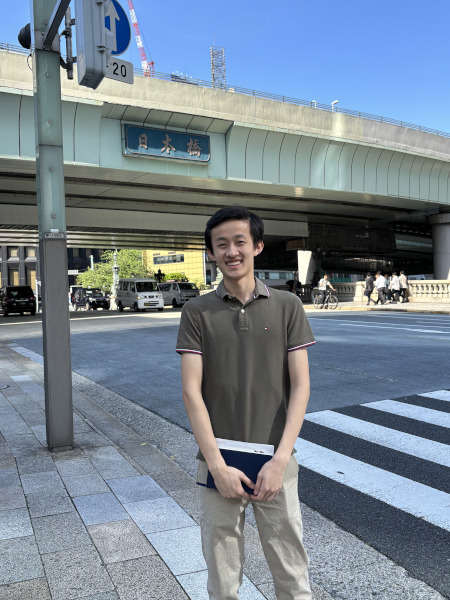
      <![CDATA[<figure class="image image-right"><img src="https://asia.nd.edu/assets/686066/spieldenner_c_p_1_vertical.jpg" alt="A middle aged couple smiles while posing in front of a fireplace." width="600" height="900">
<figcaption>Paul Spieldenner ’88 and Carolyn (Schuster) Spieldenner ’89</figcaption>
</figure>
<p>An endowed gift from husband and wife Paul Spieldenner ’88 and Carolyn (Schuster) Spieldenner ’89 to the <a href="https://asia.nd.edu">Liu Institute for Asia and Asian Studies</a> will establish a Japanese studies professorship named after the late Rev. George H. Minamiki, S.J. Regarded as one of the most demanding instructors while simultaneously eliciting loyalty among his students, Minamiki established the Japanese program at Notre Dame in 1968 and taught for more than 20 years.</p>
<p>“Studying with Father Minamiki ended up changing the trajectory of my career,” said Paul, who enrolled in Japanese language courses the first semester of his first year at Notre Dame. “But even beyond my career, studying Japanese and living abroad in Japan changed me as a person in a really worthwhile way.”</p>
<p>“He was our strictest teacher, but we grew to love him for it,” said Carolyn, who also joined Minamiki’s course her first year. “Despite the challenges in his life, he found his calling to educate about Japan. His life and career are very much worth honoring.”</p>
<p>The Rev. George H. Minamiki, S.J., Professorship in Japanese Studies in the <a href="https://keough.nd.edu">Keough School of Global Affairs</a> will allow for the hiring of a tenure-track faculty member. It is expected that the faculty search will be conducted during the 2027–28 academic year, with teaching to begin the next year.</p>
<p>“The Spieldenners’ generosity will strengthen the Keough School’s capacity to advance the study of Japan and its role in the world,” said Mary Gallagher, the Marilyn Keough Dean of the Keough School. “This professorship will bring an important new area of expertise to our faculty, enriching our students’ understanding of Japan and its significance in global affairs. We are deeply grateful to the Spieldenners for honoring Father Minamiki’s legacy in this meaningful way.”</p>
<p>“It has been wonderful to hear about how Father Minamiki inspired Paul and Carolyn as students and even into their adult lives,” said Kyle Jaros, interim director for the Liu Institute. “Through the new faculty hire it will enable, this gift has the potential to transform the lives of many Notre Dame students in a similar manner.”</p>
<p>The Spieldenners are residents of Normandy Park, Washington. As Notre Dame undergraduates, Paul majored in finance and Japanese, and Carolyn majored in government and Japanese. Paul went on to earn an MBA at the University of Chicago Booth School of Business, and Carolyn earned an MEd from Temple University’s Tokyo campus. The Spieldenners have five children.</p>
<p>Minamiki was born in Los Angeles in 1919. During World War II, his family was imprisoned at the Manzanar detention facility in California, during which time Minamiki helped teach children at the center. He went on to become a Jesuit priest and was assigned to teaching and administrative posts at schools in Japan and the US.</p>
<p>Minamiki began teaching at Notre Dame in 1968 and started the University’s Japanese language program. He also earned a PhD in liturgy from Notre Dame in 1977. He won the 1988 Sheedy Award for Excellence in Teaching in the College of Arts and Letters and the 1991 Madden Award for Outstanding Teaching of Freshmen.</p>
<p>Not only did the Spieldenners appreciate the rigor of Minamiki’s courses, but they also learned about Japanese-American history when he shared his background.</p>
<figure class="image image-default"><a href="https://asia.nd.edu/assets/686095/original/minamiki_graphic.jpg"><img src="https://asia.nd.edu/assets/686095/fullsize/minamiki_graphic.jpg" alt="Quote from Paul Spieldenner next to an Image of Father Minamiki on top of a background with a navy blue crosshatch pattern. Graphic created with an original photo provided by the Spieldenner family." width="1600" height="900"></a></figure>
<p>“Paul and I have talked about how Father Minamiki endured forced removal to an incarceration camp along with thousands of other Japanese Americans during World War II,” Carolyn recalled. “His response to that was to help start a school in the camp for the small children there, and it helped him discern that he wanted to become a Catholic priest. He devoted the rest of his life to teaching and the Church.</p>
<p>“Even when sharing stories of his imprisonment, he did not exhibit bitterness. He instead told us about how the camp was where he received his calling. He went on to be a professor that students loved because he conveyed how much he wanted to help us learn to speak Japanese and gain an appreciation for Japan.”</p>
<p>Inspired by Minamiki’s classes, Paul and Carolyn each spent their sophomore year studying at Sophia University in Tokyo, an experience they both regard as transformative.</p>
<p>When Paul returned from his year in Japan, Minamiki asked him to be his grader, a role Paul held through senior year and which brought him closer to Minamiki.</p>
<p>Minamiki’s greatest contribution to the Spieldenners was inadvertently bringing them together. At Minamiki’s annual gathering to welcome back students who had studied abroad, Paul just happened to sit next to Carolyn. They bumped into each other a couple times afterward, survived an awkward first date, and married in 1989.</p>
<p>Fortunately, opportunities to return to Japan for Paul’s career came along, and the Spieldenners accepted them. Overall, they lived in Tokyo for eight years, including their respective sophomore years of college and Paul’s time working for Morgan Stanley, Fidelity Investments, and Tiger Management. Two of their children were born in Japan.</p>
<p>The family settled in Carolyn’s hometown of Seattle in 1999 in order to be near family and because of the convenience of flying to Japan for Paul’s work, which remained closely connected to Japan for another 12 years. He currently works independently in the investment business. Carolyn is a public elementary school special education teacher.</p>
<figure class="image image-right"><a href="https://asia.nd.edu/assets/686069/original/fr_minamiki_joseph_mary_klinger_carolyn_paul_aaron.jpg"><img src="https://asia.nd.edu/assets/686069/fr_minamiki_joseph_mary_klinger_carolyn_paul_aaron.jpg" alt="A group of people smiles while sitting on a living room couch. The two men on either end hold a small child and an infant." width="600" height="338"></a>
<figcaption>Left to right: Father Minamiki, with young Joseph Spieldenner, Mary (Pozar) Klinger '92, Carolyn (Schuster) Spieldenner '89, and Paul Spieldenner '88, holding his son Aaron. Photo provided.</figcaption>
</figure>
<p>Throughout their lives in Japan and the US, the Spieldenners kept in touch with Father Minamiki. He visited them in Japan and also met them on campus, even after he retired in 1992.</p>
<p>When the ever-youthful and energetic Minamiki died suddenly in 2002 at age 82, Paul was surprised at the way his grief manifested. “Usually, writing a sympathy card is hard to do and there’s a struggle with what to say,” he recalled. “But in the case of Father Minamiki, I had so much to say, and I was desperate for someone to send a card to.”</p>
<p>He reached out through Notre Dame channels and wrote to one of Minamiki’s nephews. “I wrote the longest sympathy letter I had ever written because I wanted his family to know what an impact he had at Notre Dame,” Paul said. In return, he received a photograph of Minamiki on his ordination day that the Spieldenners have on display in their home.</p>
<p>When the Spieldenners were approached by the University about a potential gift, the couple decided that a Japanese studies professorship named for Minamiki would be the ideal channel for their endowment. Additionally, Paul said, the timing for the donation was perfect because all endowed gifts to the Liu Institute are currently being matched by the Liu family, the institute’s benefactors.</p>
<p>“When I learned about the Lius’ generous matching gift, I knew the pieces of the puzzle were coming together,” he said.</p>
<p>The final piece, he added, is to encourage other loyal students of Father Minamiki to join the Spieldenners in donating to the Minamiki professorship or the Minamiki scholarship, which provides assistance to deserving undergraduates who demonstrate financial need to study abroad in Japan.</p>
<p>“Japan is still an important partner to the US, important to the global economy, and an important part of Asia,” he said. “Father Minamiki’s mission to educate about Japan is as relevant as ever, and I hope his former students will be inspired to support this professorship just as he supported us.”</p>
<p>For information about ways to support the Minamiki professorship or the Minamiki scholarship, please contact Gavin McGuire, academic advancement director for the Keough School of Global Affairs, at <a href="mailto:gmcguir1@nd.edu">gmcguir1@nd.edu</a> or visit <a href="http://giving.nd.edu">giving.nd.edu</a>.</p>]]>
    </content>
    <link rel="enclosure" type="image/jpeg" href="https://asia.nd.edu/assets/686070/spieldenner_c_p_2.jpg" title="A middle aged couple smiles while posing in front of a fireplace."/>
    <author>
      <name>Christine Cox</name>
    </author>
  </entry>
  <entry>
    <id>tag:asia.nd.edu,2005:News/186632</id>
    <published>2026-11-02T09:21:00-05:00</published>
    <updated>2026-11-02T09:21:05-05:00</updated>
    <link rel="alternate" type="text/html" href="https://asia.nd.edu/news/chinese-theatre-scholar-tarryn-chun-wins-nyus-callaway-prize/"/>
    <title>Chinese theatre scholar Tarryn Chun wins NYU’s Callaway Prize</title>
    <summary type="text">
      <![CDATA[Tarryn Chun, an associate professor in the Department of Film, Television, and Theatre at the University of Notre Dame, has won the 2026 Callaway Prize for the Best Book on Drama, Theatre, and Performance Studies for her book Revolutionary Stagecraft: Theater, Technology, and Politics in Modern China (University of Michigan Press, 2024).]]>
    </summary>
    <content type="html">
      <![CDATA[<figure class="image image-right"><img src="https://al.nd.edu/assets/684685/400x/tarryn_chun_headshot_2023_600x.jpg" alt="Woman in black blazer smiles and crosses arms, with blurred vertical striped background." width="300" height="400">
<figcaption>Tarryn Chun, associate professor in the Department of Film, Television, and Theatre.</figcaption>
</figure>
<p><em>Editorial note: Tarryn Chun is also a faculty fellow of the Liu Institute for Asia and Asian Studies in the Keough School of Global Affairs.</em></p>
<p><a href="https://ftt.nd.edu/people/tarryn-chun/">Tarryn Chun,</a> an associate professor in the <a href="https://ftt.nd.edu/">Department of Film, Television, and Theatre</a> at the University of Notre Dame, has won the <a href="https://www.nyu.edu/about/news-publications/news/2026/october/-revolutionary-stagecraft--wins-nyu-s-callaway-prize.html">2026 Callaway Prize</a> for the Best Book on Drama, Theatre, and Performance Studies for her book <em>Revolutionary Stagecraft: Theater, Technology, and Politics in Modern China </em>(University of Michigan Press, 2024)<em>. </em></p>
<p>Awarded by New York University’s Department of English, the recognition is given to the best book in the field that was published in the last two years.</p>
<p>“I am extremely grateful to the Callaway Prize judges for their high regard of <em>Revolutionary Stagecraft</em> and the additional attention that the award will bring to my area of research,” Chun said. “One of the aims of my project was to bring Chinese theatre into ongoing broader scholarly conversations about theatre and technology, and the amount of recognition that the book has received really helps to further this goal.”</p>
<p>A scholar of Chinese literature and theatre, Chun <a href="https://al.nd.edu/news/latest-news/rethinking-theater-tarryn-chun-wins-book-award-for-research-combining-theater-technology-and-politics/">triangulates three concepts in her book: </a>theatre, technology, and politics. In her research, Chun has found that theatre has taken on many roles in politics, including as a propagandist tool or a mode of opposition to governments and institutions, and that theatre is constantly participating in or responding to politics across a wide range of historical, social, and cultural contexts.</p>
<p>Building on these connections, Chun’s <em>Revolutionary Stagecraft</em> analyzes how technology used in theatre productions — such as lighting, mechanical sets, and digital projectors — influences and is influenced by politics. She also demonstrates how early- to mid-20th century Chinese theatre offers a particularly interesting lens through which to illustrate these dynamics.</p>
<p>“Chun deploys deep research, profound knowledge, and innovative methods to analyze ‘Chinese Theater through Technicity,’ using the stuff of stagecraft, but also broader discoveries and discourses on technology and science, as sources towards political, historical and aesthetic ends,” wrote the Callaway Prize panel of judges. “Her conclusions on the play of personal agency and aesthetic innovation, bound by the techno, political, and economic realities of modern China, reveal the ways theatermakers have addressed how technology and ideologies around technology have amplified human ambition while also revealing our limitations.”</p>
<p><em>Revolutionary Stagecraft </em>has also won the Association for Theatre in Higher Education’s Outstanding Book Award and the Theatre Library Association’s George Freedley Memorial Award. It was also a finalist for the American Society for Theatre Research’s Barnard Hewitt Award.</p>
<p>“Receiving the Callaway Prize is particularly meaningful to me personally because so many of the past winners have had such a profound influence on my own research and thinking,” Chun said. “It’s humbling to join their ranks, and I hope that my own book will similarly help to inspire future generations of theatre scholars.”</p>
<p>Additionally, Notre Dame associate professor of theatre <a href="https://ftt.nd.edu/people/patrick-mckelvey/">Patrick McKelvey</a> received an honorable mention in the Callaway Prize competition for his book <a href="https://nyupress.org/9781479824878/disability-works/"><em>Disability Works: Performance After Rehabilitation</em></a><em> </em>(NYU Press, 2024), which examines the relationship between U.S. disability policy and the disability arts and culture movement from 1960 to 1990. <em>Disability Works</em> <a href="https://al.nd.edu/news/latest-news/theater-historian-honored-for-work-that-highlights-the-hidden-stories-of-disability-arts/">has won five book awards</a> and was a finalist for multiple other awards.</p>
<p class="attribution">Originally published by <span class="rel-author">Mary Kinney</span> at <span class="rel-source"><a href="https://al.nd.edu/news/latest-news/chinese-theatre-scholar-tarryn-chun-wins-nyus-callaway-prize/">al.nd.edu</a></span> on <span class="rel-pubdate">October 27, 2026</span>.</p>]]>
    </content>
    <link rel="enclosure" type="image/jpeg" href="https://asia.nd.edu/assets/685431/mnpf7845.jpg" title="A person wearing a black suit stands on a catwalk between rows of stage lighting equipment, smiling at the camera."/>
    <author>
      <name>Mary Kinney</name>
    </author>
  </entry>
  <entry>
    <id>tag:asia.nd.edu,2005:News/186532</id>
    <published>2026-10-27T11:57:00-04:00</published>
    <updated>2026-10-27T11:57:34-04:00</updated>
    <link rel="alternate" type="text/html" href="https://asia.nd.edu/news/notre-dame-law-j-s-d-candidate-pavithra-rajendran-wins-graduate-student-paper-competition/"/>
    <title>Notre Dame Law J.S.D. Candidate Pavithra Rajendran Wins Graduate Student Paper Competition</title>
    <summary type="text">
      <![CDATA[Notre Dame Law School J.S.D. candidate Pavithra Rajendran has won the 2026 Asian Journal of Law and Society and Asian Law and Society Association Graduate Student Paper Competition for her paper, “‘Kantha Desks’: Systemic Institutional Fragmentation and Sexual Offense Case Attrition in Sri Lanka.” Cambridge University Press will publish the paper in the Asian Journal of Law and Society. The annual competition recognizes graduate student scholarship on law and society in Asia.]]>
    </summary>
    <content type="html">
      <![CDATA[<figure class="image image-right"><img src="https://law.nd.edu/assets/684149/cp_8_19_26_llm_law_headshots_128.jpeg" alt="Young woman smiles wearing a brown blazer and white blouse in a library." width="600" height="400">
<figcaption><em>Pavithra Rajendran</em></figcaption>
</figure>
<p>Notre Dame Law School J.S.D. candidate <a href="https://law.nd.edu/academics/students/fall-2023-pavithra-rajendran/">Pavithra Rajendran</a> has won the 2026 Asian Journal of Law and Society and Asian Law and Society Association Graduate Student Paper Competition for her paper, “‘Kantha Desks’: Systemic Institutional Fragmentation and Sexual Offense Case Attrition in Sri Lanka.” Cambridge University Press will publish the paper in the Asian Journal of Law and Society. The annual competition recognizes graduate student scholarship on law and society in Asia.</p>
<p>Rajendran’s paper shifts attention from substantive sexual offense laws to the pretrial stage, where cases are frequently lost at the police station level. Drawing on interviews with 24 police officers across 17 police stations in five districts of Sri Lanka, she introduces the concept of “systemic institutional fragmentation” to explain how procedural rules, evidentiary practices, institutional responses, and socioeconomic and cultural conditions interact to constrain victims’ access to justice. The paper also identifies areas for reform.</p>
<p>“I always strive to ensure that my work captures the gap between law and its implementation, which is why socio-legal studies play such an important role in my scholarship,” Rajendran said. “I am therefore deeply grateful that this work has been recognized with this wonderful prize.” The selection committee praised the paper as “well-argued with solid data difficult to obtain” and said it offers “rare insights for an understudied topic.”</p>
<p>A fourth-year J.S.D. candidate, Rajendran works at the intersection of criminal law and justice and human rights under the supervision of Professor <a href="https://law.nd.edu/directory/stephen-smith/">Stephen Smith</a>. She thanked the police officers who participated in her interviews, Professor <a href="https://keough.nd.edu/about/faculty-staff-directory/susan-ostermann/">Susan Ostermann</a> of the <a href="https://keough.nd.edu/">Keough School of Global Affairs</a> for her insightful written comments, Smith for his support, and the <a href="https://kellogg.nd.edu/">Kellogg Institute for International Studies</a> for the research grant that made the fieldwork possible.</p>
<p class="attribution">Originally published by <span class="rel-author">Sophie Miller</span> at <span class="rel-source"><a href="https://law.nd.edu/news-events/news/notre-dame-law-j-s-d-candidate-pavithra-rajendran-wins-graduate-student-paper-competition/">law.nd.edu</a></span> on <span class="rel-pubdate">October 26, 2026</span>.</p>]]>
    </content>
    <link rel="enclosure" type="image/jpeg" href="https://asia.nd.edu/assets/684602/cp_8_19_26_llm_law_headshots_128.jpeg" title="Young woman smiles wearing a brown blazer and white blouse in a library."/>
    <author>
      <name>Sophie Miller</name>
    </author>
  </entry>
  <entry>
    <id>tag:asia.nd.edu,2005:News/186531</id>
    <published>2026-10-21T11:46:00-04:00</published>
    <updated>2026-10-27T11:46:11-04:00</updated>
    <link rel="alternate" type="text/html" href="https://asia.nd.edu/news/notre-dame-scholar-to-help-islamic-educators-engage-arts-humanities-to-foster-dialogue-scholarly-diversity/"/>
    <title>Notre Dame scholar to help Islamic educators engage arts, humanities to foster dialogue, scholarly diversity</title>
    <summary type="text">
      <![CDATA[Notre Dame religion scholar Ebrahim Moosa will explore how using the arts and humanities in Islamic theological education might promote greater dialogue and scholarly diversity within Muslim communities and with other faith traditions.]]>
    </summary>
    <content type="html">
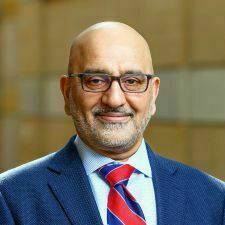
      <![CDATA[<figure class="image image-right"><img src="https://ansari.nd.edu/assets/656138/ebrahim_moosa_225.jpg" alt="The image features a man with glasses and a graying beard, dressed in a professional navy blue blazer and a red and blue striped tie. He is smiling warmly against a soft-focus architectural background, conveying a friendly yet distinguished presence." width="225" height="225"></figure>
<p>Notre Dame religion scholar<a href="https://keough.nd.edu/about/faculty-staff-directory/ebrahim-moosa/"> Ebrahim Moosa</a> will explore how using the arts and humanities in Islamic theological education might promote greater dialogue and scholarly diversity within Muslim communities and with other faith traditions.</p>
<p>Moosa, the Mirza Family Professor of Islamic Thought and Muslim Societies in Notre Dame’s <a href="https://keough.nd.edu/">Keough School of Global Affairs</a>, will work with two dozen Muslim theologians, artists and educators from Africa, North America and South Asia as part of the Pedagogies of Muslim Humanities project.</p>
<p>A product of traditional Islamic education himself, Moosa said he sees opportunities to address a gap in it. Many Islamic seminaries (both madrasas in the Sunni tradition and ḥawzas in the Shiʿa tradition) miss the opportunity to engage the humanities tradition produced by Muslim civilization, he said. Addressing that gap could help students cultivate traits such as curiosity, humility and openness to learning from other perspectives.</p>
<p>“Without these qualities, it is difficult for students to have meaningful, constructive conversations with people from different backgrounds,” Moosa said. “This project aims to revitalize the role of the arts and humanities in Islamic theological education to foster a culture of scholarly diversity and critical thinking, which is crucial for engaging with one’s own tradition as well as with people from other traditions.”</p>
<p>Key activities will include a 10-month virtual course on Islamic aesthetics, a 10-day residency at a museum of Islamic art and mentored community-based implementation where educators try out new curricula in their institutions. The project is supported by a three-year grant from the <a href="https://templetonreligiontrust.org/">Templeton Religion Trust</a>, which seeks to enrich the conversation about religion.</p>
<p>The project builds on Moosa’s earlier work as a religion scholar who is interested in revitalizing the intellectual culture of Muslim societies. In 2017, he launched the <a href="https://madrasadiscourses.nd.edu/">Madrasa Discourses</a> project engaging recently graduated Muslim theologians from South Asia.</p>
<p>Madrasa Discourses created opportunities for traditional Muslim scholars to deepen their theological and scientific literacy. Many explored their faith tradition and its resources to grapple with the philosophical challenges posed by new scientific worldviews and technologies. The project has hosted three cohorts in three countries, reaching over 100 educators.</p>
<p>Moosa is a core-affiliated faculty member of the Keough School’s <a href="https://ansari.nd.edu/">Ansari Institute for Global Engagement With Religion</a>, where he directs <a href="http://contendingmodernities.nd.edu/">Contending Modernities</a>, the global research and education initiative examining the interaction among Catholic, Muslim and other religious and secular forces in the world. He is also a faculty fellow of the Keough School's<a href="http://asia.nd.edu/"> Liu Institute for Asia and Asian Studies</a>.</p>
<p class="attribution">Originally published by <span class="rel-author">Josh Stowe</span> at <span class="rel-source"><a href="https://ansari.nd.edu/news-events/news/notre-dame-scholar-to-help-islamic-educators-engage-arts-humanities-to-foster-dialogue-scholarly-diversity/">ansari.nd.edu</a></span> on <span class="rel-pubdate">October 16, 2026</span>.</p>]]>
    </content>
    <author>
      <name>Josh Stowe</name>
    </author>
  </entry>
  <entry>
    <id>tag:asia.nd.edu,2005:News/186530</id>
    <published>2026-10-13T11:31:00-04:00</published>
    <updated>2026-10-27T11:58:04-04:00</updated>
    <link rel="alternate" type="text/html" href="https://asia.nd.edu/news/for-older-adults-in-the-himalayas-family-and-social-connection-matters-the-most/"/>
    <title>For older adults in the Himalayas, family and social connection matters the most </title>
    <summary type="text">
      <![CDATA[Suraj Parajuli is a second-year master of global affairs student from Nepal who is majoring in governance and policy. His research sits at the intersection of public health, poverty and the political economy of development. When I joined a research project on older adults in high-altitude…]]>
    </summary>
    <content type="html">
      <![CDATA[<p><em>Suraj Parajuli is a second-year master of global affairs student from Nepal who is majoring in governance and policy. His research sits at the intersection of public health, poverty and the political economy of development.</em></p>
<p>When I joined a research project on older adults in high-altitude regions of Nepal in 2024 as a co-investigator, I did not expect it to become such a meaningful part of my experience. Over the past couple of years, I have been involved in data collection, analysis and manuscript writing, and last month, we finally published our paper.</p>
<p><a href="https://journals.sagepub.com/doi/10.1177/30495334261485627">Our research</a>, published in SAGE Open Aging, looks at older adults in Lomanthang, a rural municipality in Nepal’s Mustang district, also known as a “district beyond mountains.” While health and access to services matter, our research shows that family, companionship, and social connection are equally central to how older adults experience their lives.</p>
<p>For me, one of the most important things this research brought into focus is that in the Himalayas, growing older is not only about living with physical challenges; it is also about who remains beside you. Family, friends, neighbors and community can provide something that physical facilities alone cannot: companionship, emotional support and a sense of belonging. It made me think differently about what it means to age well.</p>
<p><strong>About Project Site</strong></p>
<p><a href="https://whc.unesco.org/en/tentativelists/5256/">Lomanthang</a> sits at 3,800 meters above sea level in the Himalayas. Life there is shaped by terrain, geography, altitude, weather, migration, agriculture and limited access to services. My visit to Lomanthang village was an eye-opening experience. After travelling 12 hours on gravel and bumpy roads from Pokhara, a nearby city, I reached our project sites. Though the landscape was stunning with its mountains and rugged terrain, I also learned about the rapid environmental changes caused by climate change. Locals shared that temperatures have been rising in recent years, significantly altering their way of life, especially by reducing agricultural production.</p>
<p>Lomanthang’s terrain is arid and desert-like, with limited agricultural activities. The primary sources of income include hotel businesses and small-scale apple and potato farming. During the winter season, some older adults migrate to lower-altitude regions, while some elderly individuals remain behind to take care of their homes. Additionally, the village operates on an internal economic system, meaning that outsiders are not permitted to purchase land or property within Lomanthang. We wanted to understand what life looked like for people who had spent decades adapting to these conditions.</p>
<p><strong>The Research</strong></p>
<figure class="image image-left"><img src="https://keough.nd.edu/assets/682007/suraj_parajuli_.jpg" alt="Young man in a dark puffer jacket smiles in front of a monastery with snow-capped mountains beyond." width="600" height="600">
<figcaption>Suraj Parajuli in Nepal. Photo provided by Suraj Parajuli</figcaption>
</figure>
<p>We started this research with one simple question: What is the current status of older adults in the region in terms of their physical, mental and social well-being and what are the determinants of their quality of life.</p>
<p>To answer this question, we conducted a cross-sectional survey with narrative components designed to assess the health and quality of life comprehensively. We wanted to look beyond illness and physical health. We asked older adults about their everyday lives: who they live with, what they can do independently, what worries them, what brings them joy and what they miss.</p>
<p>Our research included 188 older adults between the ages of 65 and 89 years. Sixty-two percent of participants were living with their family members/relatives, while 38% were living without all of their family members because their children had moved to cities or abroad. In a community where youth migration is increasing, aging there means spending more time without the people who once surrounded you.</p>
<p><strong>Our findings</strong></p>
<p>Our findings showed that loneliness is the major problem that older adults in the Himalayas are going through. Loneliness emerged as a key factor shaping their physical, mental and social well-being. Our research participants described feeling happy when they could stay and talk with their children and grandchildren every day. Some talked about sitting in the sun and talking with friends and neighbors. Something as ordinary as gathering at a chautaro, a traditional resting place where people can sit and talk, could become an important part of daily life.</p>
<p>We also found loneliness among older adults (38%) was closely intertwined with regular alcohol use, which has been affecting their health status. This is because older people in Nepal often seek social connections, and they are not finding the family and social connections they need.</p>
<p>Our study found that over 90% of older adults are independently performing their activities of daily life. But in contrast, only 58% are comfortably using their in-house facilities like toilets and staircase. This highlights the mismatch between personal abilities and housing structure. This shows that housing architecture is not always age-friendly and can create functional limitations within the home.</p>
<figure class="image image-right"><img src="https://keough.nd.edu/assets/681998/fchv_lomanthang.jpg" alt="Group of people posing in front of the Lomanthang Rural Municipality building in Nepal." width="600" height="450">
<figcaption>Parajuli with Female Community Health Volunteers and research assistants in Lomanthang Rural Municipality, Mustang, Nepal. Photo provided by Suraj Parajuli</figcaption>
</figure>
<p>We also found that independence was closely connected to dignity. Participants often described the sadness of no longer being able to walk around the community, meet others, or visit the gumba. For them, dignity also lies in having the freedom to move through their community, participate in social life and remain connected to the people and places that matter to them.</p>
<p>This has broadened my understanding of “health.” In Lomanthang, however, people often described good health in much more practical terms. Being healthy meant being able to walk to see a neighbor, work in the fields, visit a gumba, a Buddhist monastery or religious site or complete daily chores without asking someone else for help.</p>
<p>So what can be done? We recommend that community-based care play a bigger role. Lomanthang already has Female Community Health Volunteers. We recommend strengthening the role of the volunteers, building their capacity, and expanding this program to other remote communities. Simple changes can also make a difference, from creating gathering spaces like chautaros to building safer, age-friendly walkways and staircases with handrails. These are small investments that can help older adults stay connected, independent, safe, and maintain their dignity.</p>
<p>Supporting older adults may not always mean only providing medical care or financial assistance, especially in highly socially connected communities like those in the Himalayas. Those things matter, but so do opportunities to remain socially connected, participate in community life, maintain independence and feel respected.</p>
<p>I am thankful to my colleagues from Nexus Institute of Research and Innovation for administering this research and to Kalash Foundation for funding this research. I am grateful to the Keough School professors for their feedback and guidance on my work and research.</p>
<p class="attribution">Originally published by <span class="rel-author">Suraj Parajuli</span> at <span class="rel-source"><a href="https://keough.nd.edu/news-and-events/news/for-older-adults-in-the-himalayas-family-and-social-connection-matters-the-most/">keough.nd.edu</a></span> on <span class="rel-pubdate">October 12, 2026</span>.</p>]]>
    </content>
    <link rel="enclosure" type="image/jpeg" href="https://asia.nd.edu/assets/684588/data_colelction.jpg" title="Women sit on the ground with medical supplies, one is writing while others look on."/>
    <author>
      <name>Suraj Parajuli</name>
    </author>
  </entry>
  <entry>
    <id>tag:asia.nd.edu,2005:News/185979</id>
    <published>2026-10-05T09:15:00-04:00</published>
    <updated>2026-10-26T14:25:35-04:00</updated>
    <link rel="alternate" type="text/html" href="https://asia.nd.edu/news/hong-family-endowment-supports-immersion-course-in-south-korea/"/>
    <title>Hong Family Endowment Supports Immersion Course in South Korea</title>
    <summary type="text">
      <![CDATA[An endowed gift to the Liu Institute for Asia and Asian Studies from University of Notre Dame alumna Jaime Saul Hong ’99 and her husband Steve Hong, residents of Costa Mesa, California, will support a high-impact spring immersion course in South Korea.]]>
    </summary>
    <content type="html">
      <![CDATA[<figure class="image image-right"><a href="https://asia.nd.edu/assets/681176/original/hong_family.jpg"><img src="https://asia.nd.edu/assets/681176/hong_family.jpg" alt="Family of father, mother, and two young daughters stand in a sunny garden." width="600" height="900"></a>
<figcaption>Steve and Jaime Hong with their daughters, Charlotte (left) and Emmeline. Photo provided.</figcaption>
</figure>
<p>An endowed gift to the <a href="https://asia.nd.edu">Liu Institute for Asia and Asian Studies</a> from University of Notre Dame alumna Jaime Saul Hong ’99 and her husband Steve Hong, residents of Costa Mesa, California, will support a <a href="https://asia.nd.edu/news/new-peace-in-korea-spring-course-includes-immersion-in-seoul/">high-impact course this spring with an immersion component in South Korea</a>.</p>
<p>The Hong Family Endowment for Excellence for Korean Studies will give Notre Dame students a broad perspective on peace in the Korean Peninsula.</p>
<p>“South Korea is a country of increasing global attention and consequence. It is at the forefront of innovation from a corporate standpoint, as well as culture,” said Jaime. “With Steve’s family’s roots in Korea, it has been important for us to layer history into our daughters’ understanding of Korea. When we visit, we not only take them to family gatherings and to eat street food, but we have also taken them to the DMZ [Demilitarized Zone] and to museums to deepen their understanding of the history and complexities of North and South Korea.</p>
<p>“There are few places left in the world where just 45 minutes outside of a thriving city lies a heavily fortified border dividing an isolationist dictatorship from one of the world’s strongest democracies. There is so much to learn from studying this conflict and potential paths to resolution.”</p>
<p>Steve said their visits illuminated the importance of supporting immersive, global education: “Education is the foundation for success. This is why we were compelled to contribute to this educational opportunity for Notre Dame students.</p>
<p>“And now that we have young children [11-year-old Charlotte and 10-year-old Emmeline], we want to set a good example by showing them the importance of giving.”</p>
<p>Both Hongs have made their careers in business: Jaime, who majored in the Program of Liberal Studies at Notre Dame, is vice president of the national commercial team at Fidelity National Title. Steve, who earned a bachelor’s degree in economics from the University of California, Irvine, is the director for strategic relationships at AllianceBernstein.</p>
<p>The course, Peace in Korea, will be launched by <a href="https://keough.nd.edu/about/faculty-staff-directory/sharon-yoon/">Sharon Yoon</a>, associate professor of Korean studies at the Keough School of Global Affairs and a Liu Institute core affiliated faculty member. Yoon, a sociologist who studies Korea and its diaspora, will lead the spring break trip, along with teaching assistant <a href="https://keough.nd.edu/about/faculty-staff-directory/paul-lee/">Paul Lee</a>, a sociology and peace studies PhD student, who is writing his dissertation on families divided by the Korean War. The course is supported by the Liu Institute and Kroc Institute for International Peace Studies.</p>
<p>“This is a rare opportunity for Notre Dame students to learn about Korea not just through reading assignments and classroom lectures but by actually going to the region, seeing the Demilitarized Zone for themselves, and talking to experts on the ground,” Yoon said. “Students will meet government officials, school teachers, North Korean defectors, and religious volunteers engaged in peace activism, while also engaging directly with Korean peers to envision new approaches to stability in Northeast Asia.</p>
<p>“I am deeply grateful to the Hong family for their generous support and enthusiasm for expanding experiential learning opportunities focused on Korea at the Keough School,” Yoon continued. “The spring immersion course will have a lasting influence on how our students understand and engage with Korea and Asia more broadly.”</p>
<p>Liu Institute Interim Director <a href="https://keough.nd.edu/about/faculty-staff-directory/kyle-jaros/">Kyle Jaros</a>, an associate professor of global affairs at the Keough School, said the gift advances the institute’s growing strength and focus on Korea. “The Liu Institute has significantly expanded its expertise on Korea and Korean studies over recent years, beginning with the recruitment of Professor Yoon to Notre Dame in 2020 and continuing with the addition of several other Korea-focused faculty fellows in the time since,” he said.</p>
<p>“To see this expertise extend beyond the classroom is exciting and will be transformative for students. The Liu Institute is very grateful for this investment in education from Jaime and Steve Hong.”</p>
<p>The Liu Institute for Asia and Asian Studies, part of Notre Dame’s <a href="https://keough.nd.edu/">Keough School of Global Affairs</a>, promotes awareness, understanding and knowledge of Asia through administering a supplementary major and minor in Asian Studies, supporting student and faculty scholarship, organizing public events, and facilitating interaction and exchanges with partners in Asia. The institute was established in 2010 by a gift from the RM Liu Foundation that supports the philanthropic activities of Robert and Mimi Liu and their children, Emily and Justin, both Notre Dame graduates.</p>]]>
    </content>
    <link rel="enclosure" type="image/jpeg" href="https://asia.nd.edu/assets/681355/hong_family_web_landscape.jpg" title="Family of father, mother, and two young daughters stand in a sunny garden."/>
    <author>
      <name>Christine Cox</name>
    </author>
  </entry>
  <entry>
    <id>tag:asia.nd.edu,2005:News/185854</id>
    <published>2026-09-29T14:44:00-04:00</published>
    <updated>2026-10-05T09:37:37-04:00</updated>
    <link rel="alternate" type="text/html" href="https://asia.nd.edu/news/new-peace-in-korea-spring-course-includes-immersion-in-seoul/"/>
    <title>New Peace in Korea spring course includes immersion in Seoul</title>
    <summary type="text">
      <![CDATA[The new course Peace in Korea: Conflict, Diplomacy, and Reconciliation will allow undergraduates to spend spring break 2027 in Seoul for an immersion that includes visiting the Demilitarized Zone and collaborating with counterparts at Korea University. Sharon…]]>
    </summary>
    <content type="html">
      <![CDATA[<p>The new course Peace in Korea: Conflict, Diplomacy, and Reconciliation will allow undergraduates to spend spring break 2027 in Seoul for an immersion that includes visiting the Demilitarized Zone and collaborating with counterparts at Korea University.</p>
<p><a href="https://keough.nd.edu/about/faculty-staff-directory/sharon-yoon/">Sharon Yoon</a>, a core affiliated faculty member for the Liu Institute for Asia and Asian Studies and associate professor of Korean Studies at the Keough School of Global Affairs, developed the course and will lead the trip, which will accommodate eight undergraduates. </p>
<p>The course examines peace, conflict, division, and reconciliation on the Korean Peninsula through historical, sociological, and peace-studies perspectives. An important part of the Seoul immersion will be a collaborative workshop with Korea University that will allow Notre Dame and Korea University students to work together to understand complex problems of conflict and peace.</p>
<p>The course is supported by <a href="https://asia.nd.edu/news/hong-family-endowment-supports-immersion-course-in-south-korea/">an endowed gift</a> from Jaime Saul Hong '99, her husband, Steve Hong, and their young daughters, Charlotte and Emmeline.</p>
<p>"This is a rare opportunity for Notre Dame students to learn about Korea, not just through reading assignments and classroom lectures but by actually going to the region, seeing the Demilitarized Zone for themselves, and talking to experts on the ground," Yoon said. "Students will meet government officials, school teachers, North Korean defectors, and religious volunteers engaged in peace activism, while also engaging directly with Korean peers to envision new approaches to stability in Northeast Asia.</p>
<p>"I am deeply grateful to the Hong family for their generous support and enthusiasm for expanding experiential learning opportunities focused on Korea at the Keough School," Yoon added. "The spring immersion course will have a lasting influence on how our students understand and engage with Korea and Asia more broadly. "</p>
<p>The course, sponsored by the <a href="https://asia.nd.edu/">Liu Institute for Asia and Asian Studies</a> and <a href="https://kroc.nd.edu/">Kroc Institute for International Peace Studies</a>, also includes individual research projects and a corresponding poster presentation. <a href="https://kroc.nd.edu/ph-d/ph-d-students/paul-kyumin-lee/">Paul Lee</a>, a PhD student in peace studies and sociology, will serve as a teaching assistant for the course.</p>
<p>Undergraduates who are interested in being accepted for the course must submit an application by 11:59 p.m. on Friday, October 16 to be considered. Selected applicants will be interviewed, and those chosen as participants will be notified before November 6, 2026. Students enrolled in the <a href="https://keough.nd.edu/academics/undergraduate-programs/supplementary-majors-and-minors/peace-studies/">peace studies supplementary major or minor</a>, <a href="https://keough.nd.edu/academics/undergraduate-programs/supplementary-majors-and-minors/asian-studies/">Asian studies supplementary major or minor</a>, or <a href="https://keough.nd.edu/academics/undergraduate-programs/global-affairs-major/">global affairs major</a> are especially encouraged to apply, but the course is open to any Notre Dame undergraduate.</p>
<p>The dates of the Seoul immersion are March 6–12, 2027. Participants will be eligible for travel funding from the Kroc and Liu institutes.</p>
<p><a class="btn btn-large" href="https://docs.google.com/forms/d/e/1FAIpQLSevNrXKJalYePrRkUT-j3sTRW__dNVz_pNd5pbBQEjcEcfWgw/viewform?usp=header"><strong>Apply here</strong></a></p>
<h2><strong>Course description</strong></h2>
<p>Nearly eight decades after the Korean War began in 1950, the Korean Peninsula remains divided under an unresolved armistice. What does it mean to speak of “peace” in a context where large-scale military conflict has subsided, but the political, social, and human consequences of conflict remain unresolved?</p>
<p>This course examines peace in Korea through historical, sociological and peace-studies perspectives. We begin by considering the distinction between negative and positive peace and then trace how national division, civilian violence, the Korean War, and the postwar US-ROK military order have shaped contemporary understandings of security, collective memory, and reconciliation. By analyzing contemporary challenges of peacebuilding in and around the Korean peninsula, we consider how different actors define peace, what kinds of change are required to move beyond the absence of war, and why efforts at peacebuilding and reconciliation have encountered political and institutional challenges.</p>
<p>This course includes a required immersion trip to Seoul during spring break (March 6-12, 2027). In addition to engaging directly with scholars, local civil society organizations, and fellow university students, the trip will involve experiential learning by visiting historically and politically significant sites such as the Demilitarized Zone. The immersion trip will provide an opportunity for students to strengthen their research skills and reflexivity about their own field inquiry projects as we bridge the gap between theoretical understandings of peace and practical applications on the Korean Peninsula.</p>
<p>For more information, please reach out to Professor Yoon at syoon5@nd.edu.</p>]]>
    </content>
    <link rel="enclosure" type="image/jpeg" href="https://asia.nd.edu/assets/680489/panmunjeom_dmz.jpeg" title="Three soldiers stand at the DMZ separating North and South Korea. Photo by Henrik Ishihara Globaljuggler and distributed through Wikimedia Commons."/>
    <author>
      <name>Liu Institute</name>
    </author>
  </entry>
  <entry>
    <id>tag:asia.nd.edu,2005:News/185708</id>
    <published>2026-09-24T08:45:00-04:00</published>
    <updated>2026-10-01T12:03:46-04:00</updated>
    <link rel="alternate" type="text/html" href="https://asia.nd.edu/news/pulitzer-prize-winning-author-yiyun-li-to-speak-at-notre-dame/"/>
    <title>Pulitzer Prize-Winning Author Yiyun Li to speak at Notre Dame</title>
    <summary type="text">
      <![CDATA[Yiyun Li, winner of the 2026 Pulitzer Prize for memoir and acclaimed author, will preview her new novel and speak about her work for the Asian American…]]>
    </summary>
    <content type="html">
      <![CDATA[<p><a href="https://www.barclayagency.com/speakers/yiyun-li/">Yiyun Li</a>, winner of the 2026 Pulitzer Prize for memoir and acclaimed author, will preview her new novel and speak about her work for the<a href="https://asia.nd.edu/events/2026/10/06/asian-american-distinguished-speaker-series-with-yiyun-li/"> Asian American Distinguished Speaker Series</a> lecture at 5:30 p.m. on October 6 (Tuesday) in the Eck Visitors Center at the University of Notre Dame. Author <a href="https://english.nd.edu/people/azareen-van-der-vliet-oloomi/">Azareen Van der Vliet Oloomi</a>, the Dorothy G. Griffin College Professor of English, will moderate the livestreamed event, which is free and open to the public.</p>
<p>“Yiyun Li is a singular author, and we are honored to celebrate the launch of her newest work,” said <a href="https://keough.nd.edu/about/faculty-staff-directory/kyle-jaros/">Kyle Jaros</a>, interim director of the Liu Institute for Asia and Asian Studies, which organizes the event. “The courage of Li’s prose is remarkable, as is her ability to bridge continents in writing.”</p>
<p>Born in China and raised amid the final years of the Mao Zedong era and the transformations of reform, Li moved to the United States in 1996, studying immunology at the University of Iowa before turning to writing fiction and becoming a US citizen in 2012. Li now serves as the Robert F. Goheen Professor in the Humanities and professor of creative writing at Princeton University.</p>
<p>In May, Li won the Pulitzer Prize in Memoir or Autobiography and the Andrew Carnegie Medal for Excellence in Nonfiction, awarded by the American Library Association, for her 2025 memoir “Things in Nature Merely Grow,” her account of losing her younger son to suicide six years after her older son died in the same manner. Suicide and mental health will be topics of Li’s conversation.</p>
<p>“Yiyun Li is one of our greatest writers. Her sentences are live wires: precise and ephemeral in equal measure,” said Van der Vliet Oloomi, a Liu Institute faculty fellow. “Li has that rare, unnameable gift of transforming the reader who encounters her work. She writes about grief, friendship, and what it means to be a writer with extraordinary intimacy and mastery.”</p>
<p>A member of the American Academy of Arts and Sciences and the American Academy of Arts and Letters, Li is the recipient of the 2021 Literature Award from the American Academy of Arts and Letters, as well as a Whiting Award, MacArthur Fellowship, Guggenheim Fellowship, the PEN/Malamud Award, the PEN/Faulkner Award, Princeton University’s Howard T. Behrman Award for Distinguished Achievement in the Humanities, and the Royal Society of Literature’s International Writers Award. Her work has been translated into more than 20 languages and has appeared in The New Yorker, “The Best American Short Stories,” and “The PEN/O. Henry Prize Stories,” among other publications.</p>
<figure class="image image-right"><a href="https://asia.nd.edu/events/2026/10/06/asian-american-distinguished-speaker-series-with-yiyun-li/#book"><img src="https://asia.nd.edu/assets/657826/300x/web_book_cover_music_against_the_night_9780374613051.jpg" alt="Large music staff overlays a harbor with boats and figures dressed in late eighteenth century clothing." width="300" height="450"></a>
<figcaption>Cover by Macmillian Publishers</figcaption>
</figure>
<p>Li’s visit will precede the official launch on October 13 of “Music Against the Night” by <a href="https://us.macmillan.com/books/9780374613051/musicagainstthenight/">Macmillan Publishers</a>, the first work in a trilogy that follows two eighteenth-century musicians as they pursue their ambitions from Dublin and French India across Europe, while grappling with political and artistic upheaval and sacrifice. The novel will be for sale at Li’s Notre Dame appearance.</p>
<p>The Liu Institute for Asia and Asian Studies organizes the <a href="https://asia.nd.edu/events/asian-american-distinguished-speaker-series/">Asian American Distinguished Speaker Series</a>, which honors innovative, creative, and effective Asian American leaders and celebrates their contributions. This year’s lecture is sponsored with support from the Nanovic Institute for European Studies, Department of East Asian Languages and Cultures, Department of English, Department of American Studies, Gender Studies Program, Creative Writing Program, University Writing Center, Initiative on Race and Resilience, and the Institute for Social Concerns.</p>
<p>Part of Notre Dame’s<a href="https://keough.nd.edu/"> Keough School of Global Affairs</a>, the Liu Institute promotes awareness, understanding and knowledge of Asia through administering a supplementary major and minor in Asian studies, supporting student and faculty scholarship, organizing public events, and facilitating interaction and exchanges with partners in Asia. The institute was established by a gift from the RM Liu Foundation that supports the philanthropic activities of Robert and Mimi Liu and their children, Emily and Justin, both Notre Dame graduates.</p>]]>
    </content>
    <link rel="enclosure" type="image/jpeg" href="https://asia.nd.edu/assets/657827/web_li_pr_photo_credit_denise_j_applewhite_.jpg" title="Author Yiyun Li. A woman with dark hair and a purple sweater poses in front of shelves of books."/>
    <author>
      <name>Jennifer Lechtanski</name>
    </author>
  </entry>
  <entry>
    <id>tag:asia.nd.edu,2005:News/185333</id>
    <published>2026-09-08T09:15:00-04:00</published>
    <updated>2026-09-08T09:11:39-04:00</updated>
    <link rel="alternate" type="text/html" href="https://asia.nd.edu/news/how-new-moms-cope-with-stressful-news-may-matter-more-than-the-news-itself-study-finds/"/>
    <title>How new moms cope with stressful news may matter more than the news itself, study finds</title>
    <summary type="text">
      <![CDATA[Notre Dame anthropologist Kristine Joy Chua and her research team asked the question: How do expectant mothers manage uncertainties and cope with sociopolitical stressors in their lives? The answer: They used creative coping strategies grounded in their culture and upbringing to reframe difficult circumstances and maintain a positive outlook, focusing instead on the things they could control and the well-being of their families.]]>
    </summary>
    <content type="html">
      <![CDATA[<figure class="image image-default"><img src="https://news.nd.edu/assets/676988/fullsize/prel_7453_kristine_joy_chua_pregnant_moms_mental_health_v2_1_1_.jpg" alt="Grayscale pregnant woman in floral dress holds her belly, with a serious expression. Framed by green tropical leaves and red orchids on yellow." width="1200" height="801">
<figcaption>Artwork by Elissa Chudzicki/University of Notre Dame</figcaption>
</figure>
<p><em>Editorial note: Kristine Joy Chua is a faculty fellow of the Liu Institute for Asia and Asian Studies in the Keough School of Global Affairs.</em></p>
<p>The everchanging social, political, and economic landscape in many countries has become more tenuous and intense in recent years. Respondents in a <a href="https://www.weforum.org/publications/global-risks-report-2026/digest/">2026 report from the World Economic Forum</a> indicated a prevailing mood of uncertainty, with 50 percent of them anticipating a turbulent or stormy outlook on life over the next two years. This negative perception swells to 57 percent of respondents when looking ahead to the next 10 years.</p>
<p>Social structures, government policies, and cultural norms shape how people think, live, and interact. If those factors are in constant flux, the repercussions can have adverse effects. More worrisome, however, is how external stressors affect pregnant women, who are already experiencing significant physiological changes in preparation for the birth of a baby and, subsequently, adjusting to life with a newborn.</p>
<p>If there are additional factors in a mother’s own life—such as violent, turbulent, or uncertain social or political circumstances—then her fear and anxiety will likely increase, potentially putting her and her unborn child’s health at risk. The impacts of these sociopolitical stressors could lead to preterm birth, among other complications, not to mention the psychological and physiological effects.</p>
<p>“Yet, we know very little about how mothers cope with these stressors,” said <a href="https://anthropology.nd.edu/people/kristine-joy-chua/">Kristine Joy Chua</a>, assistant professor in the <a href="https://anthropology.nd.edu/">Department of Anthropology</a> at the University of Notre Dame. Chua researches reproductive biology, maternal health, and health inequities, particularly within Filipino communities and communities of color.</p>
<p>This gap motivated Chua and her fellow researchers to ask the question: How do expectant mothers manage these uncertainties and cope with sociopolitical stressors? The answer became the focus of their <a href="https://www.sciencedirect.com/science/article/pii/S0277953626006490">recently published study in the journal <em>Social Science and Medicine</em></a>, of which Chua was the lead author.</p>
<p>Interviewing 21 pregnant Filipina women across multiple regions of the Philippines in 2021, Chua and her team sought to understand how these women internalized such stressors. They found that they used creative coping strategies, some of which are grounded in Filipino cultural practices and shaped how they navigated such uncertainties. Some reframed difficult circumstances and maintained a positive outlook, while others deliberately disengaged from political stressors and focused instead on the well-being of their families.</p>
<figure class="image image-right"><img src="https://news.nd.edu/assets/645633/chua_kristine_joy_c.jpg" alt="A smiling woman with long, dark hair parted in the middle. She wears small hoop earrings and a dark top against a light background." width="600" height="600">
<figcaption>Kristine Joy Chua, a biological anthropologist in the University of Notre Dame’s Department of Anthropology.</figcaption>
</figure>
<h3>What causes stress and where does it come from?</h3>
<p>According to Chua and her co-authors, previous research had been limited in that it did not address how pregnant individuals perceive and embody outside stressors and the implications for health. Nor did it address the various coping strategies they found useful in dealing with stress in order to protect their bodies and pregnancies.</p>
<p>The research team specifically chose to study pregnant women in the Philippines, a country marked by intense state violence, high poverty rates, political corruption, and a highly publicized war on drugs, as well as some of the world’s strictest COVID pandemic lockdown restrictions during the research period.</p>
<p>Their interviews with the pregnant women revealed how interconnected social, political, and economic stressors can be—with 67 percent of study participants citing financial stress, 38 percent indicating access to quality medical care, and 52 percent saying cultural pressures affected their emotional, physical, and mental well-being.</p>
<p>One of the societal challenges compounding this predicament for citizens of the Philippines is their outsized reliance on social media for gathering news and information—an open portal that has the potential to continuously feed them negative or politicized discourse. According to Chua and her co-authors, 62 percent of their study participants cited Facebook or other social media sites as their primary source of information, adding that the “news they ingested had a profound impact on their perceived stress levels.”</p>
<h3>What are some ways new moms cope?</h3>
<p>The interviewees revealed that not all of the negative news they consumed necessarily affected them adversely. Many described relying on creative coping strategies pulled from within their Filipino identity and upbringing.</p>
<p>For example, noted the researchers, many expectant mothers found ways to reframe those stressors. One way to accomplish that is through the concept of “community viewing”—comparing oneself to others to determine who might be “doing better.” The realization that others within their circle might actually be relatively worse off (experiencing death, food scarcity, and extreme poverty, for example) allowed them to manage the difficulties of their own situations.</p>
<p>Second, maintaining a positive outlook on life and being able to “laugh things off” gave them a new perspective and renewed state of mind that enabled them to ‘build resiliency against adversity.”</p>
<p>Another reframing technique many expectant moms found useful was looking toward their relationships with family members and appreciating the positive aspects of their lives. Said one study participant: “We cope by remembering the blessings we have [now] and that are yet to come.”</p>
<p>Chua said that participants also found ways to exercise their own agency, which could manifest in one of three cultural practices. One is disengaging and remaining indifferent or resistant to the news of the day—letting the negative news “go in one ear and out the other,” as one participant described.</p>
<p>A second method is to invoke the mentality of <em>bahala na—</em>a phrase that translates to “whatever happens, happens” and is driven by a belief that God will provide. In other words, they believe that regardless of how difficult things are or how far out of their control the situation may become, these new moms and their families will somehow prevail.</p>
<p>Finally, respondents found outright avoidance to be a surefire way to leave some of those stressors behind and move forward with daily living. Deliberately staying silent—as opposed to engaging in political debates or trying to change others’ political opinions—allowed them to protect themselves against unpleasant, negative, and stressful experiences during pregnancy, the co-authors wrote. Rather, they focused “on concerns within their immediate control,” such as the current safety and health of their children and the general well-being of their families.</p>
<p>Chua emphasized that “the intent of the work is not to romanticize what might be viewed as a passive outlook or response, but to investigate the strategies these women have at their disposal to cope and deal with challenging circumstances. Doing so is harmful to the participants and to the field of study.”</p>
<blockquote>
<p>“Maternal and fetal health is influenced not only by medical care but also by the broader social and political environment. And politics definitely plays a significant role in shaping perinatal health.”</p>
</blockquote>
<h3>What can these findings mean for other mothers?</h3>
<p>While these specific coping strategies were utilized by the pregnant Filipina women included in Chua’s study, their insights may extend to any expectant mother living with social, political, and financial stressors.</p>
<p>“Maternal and fetal health is influenced not only by medical care but also by the broader social and political environment,” Chua said. “And politics definitely plays a significant role in shaping perinatal health.”</p>
<p>Chua said the research highlighted how further work is needed to fully understand this interaction, as well as how these coping strategies affect stress biology during pregnancy and its impact on newborn health. “Future study also needs to take into account how helpful or harmful these coping strategies may be,” she added.</p>
<p>“Our study is one of the first to examine how Filipina women embody politics during pregnancy,” the co-authors wrote. “We expect these findings to contribute to the advancement of women’s health on a local and global level by demonstrating the complexities associated with stress embodiment, management, and its impact on fetal development.”</p>
<p><em><strong>Contact: Tracy DeStazio,</strong> associate director of media relations, 574-631-9958 or <a href="mailto:tdestazi@nd.edu">tdestazi@nd.edu</a></em></p>
<p class="attribution">Originally published by <span class="rel-author">Tracy DeStazio</span> at <span class="rel-source"><a href="https://news.nd.edu/news/how-new-moms-cope-with-stressful-news-may-matter-more-than-the-news-itself-study-finds/">news.nd.edu</a></span> on <span class="rel-pubdate">September 03, 2026</span>.</p>]]>
    </content>
    <link rel="enclosure" type="image/jpeg" href="https://asia.nd.edu/assets/677418/prel_7453_kristine_joy_chua_pregnant_moms_mental_health_v2_1_1_.jpg" title="Grayscale pregnant woman in floral dress holds her belly, with a serious expression. Framed by green tropical leaves and red orchids on yellow."/>
    <author>
      <name>Tracy DeStazio</name>
    </author>
  </entry>
  <entry>
    <id>tag:asia.nd.edu,2005:News/185274</id>
    <published>2026-09-03T11:15:00-04:00</published>
    <updated>2026-09-03T11:55:57-04:00</updated>
    <link rel="alternate" type="text/html" href="https://asia.nd.edu/news/liu-institute-launches-2025-26-year-in-review/"/>
    <title>Liu Institute launches 2025-26 Year in Review</title>
    <summary type="text">
      <![CDATA[The Liu Institute for Asia and Asian Studies has released an all-digital 2025-26 Year in Review, which captures the past academic year through features of new faculty fellows, support of Asia-related research and projects, and graduates of the Asian Studies…]]>
    </summary>
    <content type="html">
      <![CDATA[<p>The Liu Institute for Asia and Asian Studies has released an all-digital <a href="https://asia.nd.edu/about/2025-26-year-in-review/">2025-26 Year in Review</a>, which captures the past academic year through features of new faculty fellows, support of Asia-related research and projects, and graduates of the Asian Studies supplementary major and minor.</p>
<p>All previous issues of the Year in Review are now available <a href="https://asia.nd.edu/about/year-in-review/">online</a>.</p>
<hr>
<div class="card hover-bg">
<p class="card-image"><img src="https://asia.nd.edu/assets/674408/fullsize/yir_26_paul_roberts_edited_jm_101419_liu_blessing_and_celebration_paul_roberts.jpg" alt="Paul Roberts '71 at a Liu Institute Reception" width="1600" height="900"></p>
<div class="card-body">
<h2 class="card-title"><a class="card-link" href="https://asia.nd.edu/about/2025-26-year-in-review/">From Our Advisory Board Chair</a></h2>
<p>Paul Roberts '71 thanks founding director and welcomes new director.</p>
</div>
</div>
<hr>
<div class="card hover-bg">
<p class="card-image"><img src="https://asia.nd.edu/assets/672737/fullsize/yir_26_ff_cover.jpg" alt="Montage of 36 Liu Institute faculty fellows" width="1600" height="900"></p>
<div class="card-body">
<h2 class="card-title"><a class="card-link" href="https://asia.nd.edu/about/faculty-fellow-highlights/">Faculty Fellows Highlights</a></h2>
<p>Learn more about awards, publications, and our newest faculty fellows.</p>
</div>
</div>
<hr>
<div class="card hover-bg">
<p class="card-image"><img src="https://asia.nd.edu/assets/671899/fullsize/yir_26_inha_park_exhibition_archives_web.jpg" alt="Aldo Manuzio exhibition (Incheon, South Korea) and a woman in a cream shirt with brown hair examining materials from the Dante exhibition and lecture at Sojeonseolim Library (Seoul, South Korea)." width="1600" height="900"></p>
<div class="card-body">
<h2 class="card-title"><a class="card-link" href="https://asia.nd.edu/grants/2025-26/">Grants Awarded</a></h2>
<p>Students and faculty fellows were awarded over 100 grants for research, learning experiences, language study, conference participation, and more.</p>
</div>
</div>
<hr>
<div class="card hover-bg">
<p class="card-image"><img src="https://asia.nd.edu/assets/665616/fullsize/ryokan.jpg" alt="The Notre Dame Fukushima research team stands with innkeeper Tomoko Kobayashi (fifth from left) outside her Futabaya Ryokan in Odaka, Fukushima. From left: Professor Noriko Hanabusa, Lucy Reardon, Sophie Ramos, Teresa Elfrink, Kobayashi, Aidan Machado, Ethan Chiang, and Professor Jessica McManus Warnell." width="1600" height="900"></p>
<div class="card-body">
<h2 class="card-title"><a class="card-link" href="https://asia.nd.edu/about/student-success/">Student Successes</a></h2>
<p>Read more about the class of 2026 and other student achievements.</p>
</div>
</div>
<hr>
<div class="card hover-bg">
<p class="card-image"><img src="https://asia.nd.edu/assets/643950/fullsize/protesters_in_thailand_adobestock_648254506_web_1600x900.jpg" alt="Protesters in Thailand raise 3 fingers for new constitution and monarchy reform in 2020." width="1600" height="900"></p>
<div class="card-body">
<h2 class="card-title"><a class="card-link" href="https://asia.nd.edu/about/thematic-research-clusters/">Thematic Research Clusters</a></h2>
<p>This year, the Liu Institute launched a new research cluster on Asian Political Cultures and showcased a new lightning talk format for grant recipients at the Justice and Asia Distinguished Lecture.</p>
</div>
</div>
<hr>
<div class="card hover-bg">
<p class="card-image"><img src="https://asia.nd.edu/assets/639727/fullsize/hong_kong_mh_hr_shaking_hands_after_lecture.jpg" alt="Michel Hockx shaking hands with a student after the lecture." width="1600" height="1067"></p>
<div class="card-body">
<h2 class="card-title"><a class="card-link" href="https://asia.nd.edu/about/tribute-to-michel-hockx/">A Tribute to Founding Director Michel Hockx</a></h2>
<p>Highlights from ten years of service to the Liu Institute for Asia and Asian Studies.</p>
</div>
</div>
<hr>
<p><sub><em>Header image by Matt Cashore/University of Notre Dame, 2022. Additional photography by staff, students, and faculty.</em></sub></p>]]>
    </content>
    <link rel="enclosure" type="image/jpeg" href="https://asia.nd.edu/assets/675864/yir_26_cover_large_header.jpg" title="Aerial view of Jenkins Nanovic Halls with a golden filter overlayed."/>
    <author>
      <name>Liu Institute</name>
    </author>
  </entry>
  <entry>
    <id>tag:asia.nd.edu,2005:News/182665</id>
    <published>2026-08-24T09:10:00-04:00</published>
    <updated>2026-09-01T14:26:31-04:00</updated>
    <link rel="alternate" type="text/html" href="https://asia.nd.edu/news/korea-working-group-launching-news/"/>
    <title>Liu Institute launches Korea Working Group</title>
    <summary type="text">
      <![CDATA[The Liu Institute for Asia and Asian Studies has launched the Korea Working Group this academic year to advance research on the Korean Peninsula from a global and regional perspective. The group’s first activity is a public lecture by Dahjin…]]>
    </summary>
    <content type="html">
      <![CDATA[<p>The Liu Institute for Asia and Asian Studies has launched the <a href="https://asia.nd.edu/research/korea-working-group/">Korea Working Group</a> this academic year to advance research on the Korean Peninsula from a global and regional perspective.</p>
<p>The group’s first activity is a public lecture by <a href="https://keough.nd.edu/about/faculty-staff-directory/dahjin-kim/">Dahjin Kim</a>, an assistant professor of Asian Studies and global affairs at the Keough School of Global Affairs, who will present <a href="https://asia.nd.edu/events/2026/09/25/korea-working-group-seminar-foreign-brides-and-local-hierarchies-threat-to-social-standing-and-the-gendered-politics-of-marriage-migration-with-dahjin-kim/">“Foreign Brides and Local Hierarchies: Threat to Social Standing and the Gendered Politics of Marriage Migration”</a> at 12:00 p.m. on Friday, September 25 at the Liu Institute, 2148 Jenkins Nanovic Halls. Refreshments will be served.</p>
<p>The working group will host the public lecture <a href="https://asia.nd.edu/events/2026/11/18/korea-working-group-public-lecture-against-abandonment-repertoires-of-solidarity-in-south-korean-protest-with-jennifer-jihye-chun-1/">“Against Abandonment: Repertoires of Solidarity in South Korean Protest”</a> by <a href="https://irle.ucla.edu/portfolio-item/jennifer-chun/">Jennifer Jihye Chun</a>, a professor of Asian American Studies and labor studies at the University of California, Los Angeles. The lecture will be held at 12:00 p.m. on Wednesday, November 18, in 1050 Jenkins Nanovic Halls.</p>
<p>The Korea Working Group is an academic community that emerged from the growing strength of Korea-focused scholarship at the Keough School and seeks to provide a collaborative forum for faculty, students, and practitioners in the humanities, social sciences, and public policy. The group is founded and led by sociologist <a href="https://keough.nd.edu/about/faculty-staff-directory/sharon-yoon/">Sharon Yoon</a>, an associate professor of Korean Studies at the Keough School and a core affiliated faculty member for the Liu Institute, whose research examines social movements, migration, and contentious politics in Korea and East Asia.</p>
<p>“Former President [Suk Yeol] Yoon’s declaration of martial law in late 2025 serves as a powerful reminder that democracy is never a finished project,” Professor Yoon said. “The Korea Working Group will serve as a platform for deepening our understanding of democratic resilience and the institutional vulnerabilities that enable backsliding—lessons that extend far beyond the Korean Peninsula.”</p>
<p>The group’s founding members also include Kim, a core affiliated faculty member with the Liu Institute, and <a href="https://keough.nd.edu/about/faculty-staff-directory/yong-suk-lee/">Yong Suk Lee</a>, associate professor of technology, economy, and global affairs at the Keough School and a Liu Institute faculty fellow.</p>
<p>The Korea Working Group leaders bring complementary expertise on how Korean society—one of the most vibrant democracies in Asia—has responded to technological advancement, economic precarity, migration, and political polarization. Their scholarship addresses these interconnected challenges from diverse disciplinary perspectives, positioning the working group to produce research that is deeply grounded in the Korean context and broadly relevant to global conversations.</p>
<p>Through guest lectures, manuscript workshops, research collaborations, and symposia, the Korea Working Group seeks to solidify Notre Dame’s role as an emergent center for Korea-related research. In doing so, the group advances the Liu Institute’s mission of fostering globally engaged and policy-relevant inquiry on Asia and beyond.</p>
<p>Participation is open to anyone with an academic interest in Korea. To join the Korea Working Group mailing list, <a href="https://docs.google.com/forms/d/e/1FAIpQLSffE3CIE41pph9JQO_Ou4yrQm6PJTxUo28_ifbqSY6G9GFyvw/viewform">please fill out this form</a>.</p>]]>
    </content>
    <link rel="enclosure" type="image/jpeg" href="https://asia.nd.edu/assets/662241/web_southern_side_of_woljeonggyo_bridge_illuminated_at_sunset_in_gyeongju_south_korea.jpg" title="Southern side of Woljeonggyo Bridge illuminated at sunset in Gyeongju South Korea"/>
    <author>
      <name>Liu Institute</name>
    </author>
  </entry>
  <entry>
    <id>tag:asia.nd.edu,2005:News/182937</id>
    <published>2026-08-19T14:15:00-04:00</published>
    <updated>2026-08-27T11:46:46-04:00</updated>
    <link rel="alternate" type="text/html" href="https://asia.nd.edu/news/fukushima-fieldwork-five-multidisciplinary-students-join-resiliency-research-team/"/>
    <title>Fukushima fieldwork: Five students join multidisciplinary research team to examine recovery</title>
    <summary type="text">
      <![CDATA[During a research trip to Fukushima in May, each of five Notre Dame undergraduates examined disaster recovery through a different research lens: business, engineering, human rights advocacy, and policy.]]>
    </summary>
    <content type="html">
      <![CDATA[<figure class="image image-default"><img src="https://asia.nd.edu/assets/665612/fullsize/mrsyokota.jpg" alt="Five Notre Dame students interview a farmer in Fukushima in 2026." width="1600" height="900">
<figcaption>Notre Dame students interview flower farmer Hiroko Yokota in her home in Fukushima. Photo by Jessica McManus Warnell, May 2026.</figcaption>
</figure>
<p>During a research trip to Fukushima in May, each of five Notre Dame undergraduates examined disaster recovery through a different research lens: business, engineering, human rights advocacy, and policy. Still, their comments about their fieldwork revealed an overarching truth about rebuilding a community: It is far more complex than they could have ever imagined, and it takes multidisciplinary efforts.</p>
<p>“I realized that there are more nuances to rebuilding than just whether a business survived or reopened,” said Sophie Ramos, a finance and strategic management major. “Recovery is also about identity, memory, and the difficult balance between honoring what a place once was while allowing it to become something new.”</p>
<p>The 10 days they spent in Japan came just two months after the 15th anniversary of the Fukushima triple disaster of 9.0 magnitude earthquake, 40-foot tsunami, and nuclear reactor meltdown at the TEPCO Fukushima Daiichi Power Station on March 11, 2011, which resulted in the displacement of over 164,000 people. While the Japanese government, businesses, and individuals have invested heavily in remediation and recovery, efforts remain ongoing.</p>
<figure class="image image-default"><img src="https://asia.nd.edu/assets/665618/fullsize/seawall.jpg" alt="A team of faculty and student researchers examine a seawall in Fukushima in May 2026." width="1600" height="900">
<figcaption>A team of faculty and student researchers examine a seawall near the TEPCO Fukushima Daiichi Power Station.</figcaption>
</figure>
<p>The students were part of a project led by <a href="https://mendoza.nd.edu/mendoza-directory/profile/jessica-mcmanus-warnell/">Jessica McManus Warnell</a>, a business ethics professor, and <a href="https://eastasian.nd.edu/faculty-staff/noriko-hanabusa/">Noriko Hanabusa</a>, a Japanese language and culture professor, who established the research program in 2019 after co-teaching a short-term study abroad course for ND students in Tokyo for several years. The five students who traveled to Japan in May were the second group of research students to have done so. <a href="https://stories.nd.edu/stories/fukushima-firsthand/">The first group went in 2023.</a></p>
<p>“We started this project because communities around the world face increasing environmental disasters. As communities navigate these challenges and cultivate resilience, collaboration among community leaders, businesses, and other sectors is key. Students can contribute their energy and time by shining a light on these stories of recovery, and by sharing their research findings with stakeholders. And they will take these lessons into their own professional lives,” said McManus, the Rex and Alice A. Martin Faculty Director of the <a href="https://ethicalleadership.nd.edu/">Notre Dame Deloitte Center for Ethical Leadership</a> and a teaching professor in the Department of Management &amp; Organization for the Mendoza College of Business.</p>
<figure class="image image-left"><img src="https://asia.nd.edu/assets/665652/deloittejapan.jpg" alt="Notre Dame students and professors meet with Deloitte Japan representatives in Tokyo in May 2026." width="600" height="338">
<figcaption>Notre Dame students and professors meet with Deloitte Japan representatives in Tokyo.</figcaption>
</figure>
<figure class="image image-left"><img src="https://asia.nd.edu/assets/666064/studentsattemple.jpg" alt="Students Aidan Machado, Ethan Chiang, Sophie Ramos, and Lucy Reardon visit a temple in Tokyo in May 2026." width="600" height="338">
<figcaption>Students (from left) Aidan Machado, Ethan Chiang, Sophie Ramos, and Lucy Reardon visit Marishiten Tokudaiji Temple in Ueno, Tokyo.</figcaption>
</figure>
<figure class="image image-left"><img src="https://asia.nd.edu/assets/665615/noriko_and_jessica_walking_2026.jpg" alt="Liu Institute faculty fellows Noriko Hanabusa and Jessica McManus Warnell walk in Tokyo in May 2026." width="600" height="338">
<figcaption>Liu Institute faculty fellows Noriko Hanabusa (left) and Jessica McManus Warnell walk in near the Imperial Palace in Tokyo.</figcaption>
</figure>
<figure class="image image-left"><img src="https://asia.nd.edu/assets/665626/deloitteemployeesfukushima.jpg" alt="Deloitte employees of Fukushima pose in front of new construction." width="600" height="338">
<figcaption>Deloitte Japan employees visit the TEPCO plant in Fukushima.</figcaption>
</figure>
<hr>
<p>The trip started with a few days in Tokyo, including a visit to <a href="https://www.deloitte.com/us/en/what-we-do/capabilities/japanese-business-solutions.html">Deloitte Japan</a>, a corporation that remains committed to bringing back communities and infrastructure in Fukushima. Students learned about the scale of multisector engagement required for a community to flourish. Deloitte Japan’s leadership team shared insights from their on-the-ground support of small business owners, civic leaders, and community members, including the work of professionals who moved to the prefecture to work hand-in-hand, and by providing relief in ways as diverse as direct support to pro bono advisory services.</p>
<p>Students were especially inspired by Hideyuki Koike, a Deloitte professional, who is so committed to rebuilding Fukushima that he relocated there, not only to share his expertise, but to integrate his and his family’s life into the community.</p>
<figure class="image image-default"><img src="https://asia.nd.edu/assets/665623/fullsize/kerriganandteam.jpg" alt="Alumnus Dan Kerrigan (center, in suit) leads a Notre Dame research team across the bridge at the imperial Palace in Tokyo." width="1600" height="900">
<figcaption>Alumnus Dan Kerrigan (center, in suit) leads a Notre Dame research team across the bridge at the imperial Palace in Tokyo.</figcaption>
</figure>
<p>In Fukushima, the students interviewed a variety of people, including octogenarian farmers who have switched their crops from fruit to flowers to meet shifting demand; young people who are eschewing life in Tokyo for entrepreneurial ventures in Fukushima’s small towns; and an innkeeper not only determined to keep her family’s multi-generational business going, but who has also helped connect residents in Fukushima with communities in Ukraine who lived through the Chernobyl nuclear disaster to foster mutual support.</p>
<p>They also witnessed the important role of long-time community members who host weekly markets and share meeting space for informal networking and connection.</p>
<figure class="image image-default"><img src="https://asia.nd.edu/assets/666066/fullsize/yokotahouse.jpg" alt="The group talks outside of the Yokota's family home in Japan." width="1600" height="900">
<figcaption>Student and faculty researchers speak to farmers Yoshitomo and Hiroko Yokota outside their home.</figcaption>
</figure>
<p>“The five students who went on this research trip were outstanding and were chosen from a very competitive application process of more than 20 students,” McManus said. “They developed solid individual research proposals, and this trip was especially meaningful since it took place 15 years after the triple disaster. I’m confident their findings will contribute to our projects and offer insights into the crucial field of disaster resiliency research.”</p>
<h3>Undergraduates and their research topics</h3>
<figure class="image-right image-circle"><img src="https://asia.nd.edu/assets/667277/200x/fukushima_student_headshots_ethan_chiang.jpg" alt="Ethan Chiang, a college age young man with black hair, smiles while wearing a grey-green collared shirt, tan pants, and holds a book on the streets of Japan." width="200" height="200">
<figcaption></figcaption>
</figure>
<p><strong>Ethan Chiang, Business Analytics and Global Affairs</strong></p>
<p><em>“Recovery is rarely singular, monolithic, or linear. When we ask how a community heals after a disaster, we must recognize that the very notion of recovery is plural and polyvalent. Even within a single square kilometer, neighbors may hold diametrically differing conceptions of what ‘building back’ ought to entail. The project of recovery is thus inherently messy — a continuous negotiation between the preservation of memory and the endeavors of progress.”</em></p>
<p>Chiang is examining how civil society organizations bridge the gap between international legal frameworks and the historical memory of local communities in their post-Fukushima human rights advocacy. His research also examines the extent to which the invocation of international technocratic standards by state actors facilitate or hinder domestic implementation of human rights for workers and displaced populations.</p>
<p><a href="https://asia.nd.edu/news/fukushima-at-15-encountering-post-disaster-recovery-firsthand/">Read his blog post about the trip.</a></p>
<figure class="image-right image-circle"><img src="https://asia.nd.edu/assets/667275/200x/fukushima_student_headshots_teresa_elfrink.jpg" alt="Teresa Elfrink is a college aged woman with long reddish brown hair in a braid over her shoulder. She smiles at the camera while wearing a backpack and holding onto a rolling suitcase in front of a sign that says Welcome to Tokyo." width="200" height="200"></figure>
<p><strong>Teresa Elfrink, Environmental Engineering</strong></p>
<p><em>“I think that the issue of nuclear power is more complex, specifically for Japan, due to its geological realities as well as population distribution. All of these complexities were made clear by the trip and caused me to rethink when nuclear is a good energy source, but also understand that there are no clear answers. It remains difficult to weigh the pros and cons of Japan’s future with nuclear power.”</em></p>
<p>Elfrink's research focuses on the Advanced Liquid Processing System (ALPS), a water treatment technology designed to remove 62 hazardous radionuclides through coprecipitation, adsorption, and ion-exchange processes. While ALPS is highly effective at reducing radioactive contaminants, it does not remove tritium. To address this limitation, the treated water is diluted with seawater to concentrations below one-fortieth of regulatory safety limits before being gradually discharged into the Pacific Ocean.</p>
<p>In addition to examining the technical aspects and effectiveness of the ALPS treatment system, her research investigates public perceptions of the treated water release among local, national, and international communities. She is particularly interested in how scientific evidence, risk communication, and public trust shape these perceptions, as well as the potential social, economic, and cultural impacts on the surrounding communities.</p>
<figure class="image-right image-circle"><img src="https://asia.nd.edu/assets/667278/200x/fukushima_student_headshots_aidan_machado.jpg" alt="Aidan Machado, a college aged male with blond hair, poses with his thumb up in a jacket, green tee shirt, and jeans, in front of a pagoda in Japan." width="200" height="200"></figure>
<p><strong>Aidan Machado, Biology and Japanese</strong></p>
<p><em>“When interviewing residents I was expecting strong yes or no sentiments, especially regionally dependent. However, very rarely did I see anyone very strongly for or against nuclear energy. This way of thinking is extremely important in reflecting on how our opinions are formed and what a more nuanced view may look like. It’s especially important to avoid echo chambers that have become so prevalent.”</em></p>
<p>Machado is examining the extent to which public opinion influences energy policy in Japan, particularly in the post-Fukushima period, and how public distrust after the disaster constrained the government’s ability to restart nuclear reactors despite energy security needs.</p>
<figure class="image-right image-circle"><img src="https://asia.nd.edu/assets/667274/200x/fukushima_student_headshots_sophia_ramos.jpg" alt="Sophia Ramos is a young college aged woman with dark long hair wearing a white shirt and a black blazer." width="200" height="200">
<figcaption></figcaption>
</figure>
<p><strong>Sophie Ramos, Finance and Strategic Management</strong></p>
<p><em>“In Mendoza we are constantly told to ‘Grow the Good in Business.’ I had always understood this as a call to act ethically and lead with strong morals as individuals entering the business world. While in Fukushima, however, I began to see this phrase in a broader way. The many hard-working and inspiring people of Fukushima work tirelessly to rebuild existing businesses and create new opportunities so that good can continue to flourish in the region.”</em></p>
<p>Ramos is examining how the disaster affects Japan’s agri-food export markets, and how the discharge of wastewater complicated recovery by prolonging trade barriers and market stigma.</p>
<figure class="image-right image-circle"><img src="https://asia.nd.edu/assets/667276/200x/fukushima_student_headshots_lucy_reardon.jpg" alt="Lucy Reardon is a college aged woman with long dark blond hair. She wears a black sweater with delicate gold jewelry and smiles at the camera in front of a brick building." width="200" height="200"></figure>
<p><strong>Lucy Reardon, Finance and Political Science</strong></p>
<p><em>“A main focus for my research considered the monetary support that organizations give to small businesses and how these groups working together impacts the speed of recovery. However after my time in Japan, I have realized there are more layers to these networks. I think that the community also is an important group in considering the speed and strength of recovery. Many of these small businesses rely on the relationships they have with their community members for support, which is a key aspect to recovery in the region.”</em></p>
<p>Reardon examined how vertical (government–business) and horizontal (community–business) networks influence small businesses’ role in recovery and how interactions between these sectors shape recovery outcomes.</p>
<p>The students are planning to present their research in fall 2026. Please <a href="https://signup.e2ma.net/signup/1925396/1750897/">sign up for the Liu Institute newsletter</a> for more information.</p>
<p>The fieldwork trip was sponsored by the <a href="https://asia.nd.edu/">Liu Institute for Asia and Asian Studies</a> and its <a href="https://asia.nd.edu/news/liu-institute-announces-paul-and-jane-roberts-endowment-for-excellence-for-the-fukushima-project/">Roberts Endowment for Excellence for the Fukushima Project</a> and the Notre Dame Deloitte Center for Ethical Leadership.</p>]]>
    </content>
    <link rel="enclosure" type="image/jpeg" href="https://asia.nd.edu/assets/665612/mrsyokota.jpg" title="Five Notre Dame students interview a farmer in Fukushima in 2026."/>
    <author>
      <name>Liu Institute</name>
    </author>
  </entry>
  <entry>
    <id>tag:asia.nd.edu,2005:News/183107</id>
    <published>2026-07-15T09:05:00-04:00</published>
    <updated>2026-09-01T14:32:45-04:00</updated>
    <link rel="alternate" type="text/html" href="https://asia.nd.edu/news/indias-immunization-program-reduced-child-mortality-but-highlights-need-for-coordinating-health-education-policies/"/>
    <title>India’s immunization program reduced child mortality but highlights need for coordinating health, education policies</title>
    <summary type="text">
      <![CDATA[Research from the University of Notre Dame shows how India’s immunization program saved children’s lives and highlights the need for stronger connections between health and education policies.]]>
    </summary>
    <content type="html">
      <![CDATA[<figure class="image image-right"><img src="https://keough.nd.edu/assets/666230/vaccinations_feature.jpg" alt="A child receives a vaccine at a clinic in eastern India." width="600" height="338">
<figcaption>A child receives a vaccine at a clinic in eastern India. Notre Dame research finds that the country’s immunization program reduced child deaths and highlights the need to coordinate health and education policies. Photo credit: <a href="https://www.flickr.com/photos/14214150@N02/8380317750">DFID/UK Department for International Development</a>.</figcaption>
</figure>
<p>Each year, approximately 700,000 children worldwide die from diseases that vaccines could have prevented, nearly all of them in low- and middle-income countries. New research from University of Notre Dame economist <a href="https://keough.nd.edu/about/faculty-staff-directory/santosh-kumar-gautam/">Santosh Kumar Gautam</a> finds that India’s national childhood immunization program helped address this persistent global health challenge, producing substantial reductions in child deaths.</p>
<p>The study, published in the <a href="https://doi.org/10.1007/s00148-026-01186-8">Journal of Population Economics</a>, also found that the immunization program had mixed long-term effects on educational attainment. While exposure to the program reduced primary school completion, it increased secondary school completion, suggesting that improvements in child survival can influence education through multiple pathways. Findings underscore the importance of coordinating health and education policies so that gains in child survival are matched by investments in schools and learning.</p>
<p>“Vaccines are one of the most cost-effective investments a country can make in improving child health and human capital,” said Gautam, professor of development and global health economics at Notre Dame’s <a href="https://keough.nd.edu/">Keough School of Global Affairs</a>. “I wanted to understand not only how India's immunization program saved lives, but also how it affected educational trajectories and human capital development.”</p>
<h2>An experiment that reduced infant mortality</h2>
<p>India launched its Universal Immunization Programme in 1985 and implemented it district by district, reaching full national coverage by 1990. Because some districts received the program years before others, and because only children under age 1 were eligible for the vaccines, Gautam was able to compare children born just before and just after the program arrived in their district.</p>
<p>Drawing on a national survey of nearly 900,000 children, Gautam found that the program reduced infant mortality by 0.4 percentage points and under-five mortality by 0.5 percentage points — substantial gains at a time when nearly 1 in 10 infants died before their first birthday.</p>
<p>Those mortality gains were concentrated among children in rural areas, from poor households and from historically disadvantaged caste groups. Children from wealthier, urban or higher-caste households saw little change, Gautam said. This may be because many already had access to vaccination before the program arrived.</p>
<h2>Mixed educational outcomes</h2>
<p>The study also found nuanced effects on educational attainment. While the immunization program reduced primary school completion, it increased secondary school completion among surviving children.</p>
<p>Gautam said the results may reflect who survived because of the program. Some children who benefited from vaccination may not have reached school age otherwise; and, as a group, they tended to have poorer underlying health. That change in the student population may have lowered average primary school completion rates.</p>
<p>Meanwhile, children who would have survived regardless but were healthier because of vaccination were more likely to complete secondary school. Strained school infrastructure may also have reinforced the pattern, Gautam said. A sudden increase in surviving children can crowd classrooms and stretch already limited resources, particularly in the early grades.</p>
<h2>Designing health and education policy together</h2>
<figure class="image image-right"><img src="https://keough.nd.edu/assets/666261/santosh_gautam_new.jpeg" alt="Santosh Kumar Gautam, a Notre Dame researcher, is pictured." width="600" height="400">
<figcaption>Notre Dame economist Santosh Kumar Gautam researches how investments in early child and maternal health can reduce poverty and help people thrive.</figcaption>
</figure>
<p>Ultimately, Gautam said, the research shows health and education investments work best when they are planned holistically rather than treated as unrelated priorities.</p>
<p>“This study illustrates how health and education planners can strengthen their coordination and produce better outcomes by working together,” Gautam said. “In addition to focusing on saving lives, governments should design policies that follow children into the classroom.”</p>
<p>The study also challenges the assumption that large public health campaigns in developing countries are inevitably undermined by weak implementation, Gautam said. Despite documented problems with medical absenteeism and service delivery in India’s health system, the program still produced a measurable reduction in child deaths.</p>
<p>The research contributes to Gautam’s broader work as an economist who studies how investments in early child and maternal health can reduce poverty and help people thrive. It is particularly relevant for resource-constrained settings, where smarter policy design is critical to improving outcomes amid limited funding.</p>
<p>“Effective immunization policy requires measuring not only who vaccines protect, but also how they shape broader human capital and support the best use of scarce public resources,” Gautam said.</p>
<p>A development and global health economics expert at Notre Dame, Gautam is the director of doctoral studies for the Keough School’s <a href="https://keough.nd.edu/academics/phd-program/ph-d-in-sustainable-development/">Ph.D. in Sustainable Development</a> and directs the <a href="https://keough.nd.edu/academics/master-of-global-affairs/concentrations/sustainable-development/">sustainable development major</a> in the school’s <a href="https://keough.nd.edu/academics/master-of-global-affairs/">Master of Global Affairs</a> program. He is an affiliate of Notre Dame’s <a href="https://globalhealth.nd.edu/">Eck Institute for Global Health</a> and the <a href="https://biglab.nd.edu/">Building Inclusive Growth (BIG) Lab </a>(part of the Keough School’s <a href="https://pulte.nd.edu/">Pulte Institute for Global Development</a>) and a faculty fellow at the Keough School’s <a href="https://kellogg.nd.edu/">Kellogg Institute</a>.  </p>
<p>The study received open access funding from the University of Notre Dame’s <a href="https://www.library.nd.edu/">Hesburgh Libraries</a>.</p>
<p><strong><em>Media Contact</em></strong><em>: Tracy DeStazio, associate director of media relations, 574-631-9958 or </em><a href="mailto:tdestazi@nd.edu"><em>tdestazi@nd.edu</em></a></p>
<p class="attribution">Originally published by <span class="rel-author">Josh Stowe</span> at <span class="rel-source"><a href="https://keough.nd.edu/news-and-events/news/indias-immunization-program-reduced-child-mortality-but-highlights-need-for-coordinating-health-education-policies/">keough.nd.edu</a></span> on <span class="rel-pubdate">July 14, 2026</span>.</p>
<p class="attribution"><em>Editorial note: Santosh Kumar Gautam is also a faculty fellow of the <a href="https://asia.nd.edu">Liu Institute for Asia and Asian Studies</a>.</em></p>]]>
    </content>
    <link rel="enclosure" type="image/jpeg" href="https://asia.nd.edu/assets/666370/vaccinations_feature.jpg" title="A child receives a vaccine at a clinic in eastern India."/>
    <author>
      <name>Josh Stowe</name>
    </author>
  </entry>
  <entry>
    <id>tag:asia.nd.edu,2005:News/183108</id>
    <published>2026-07-14T11:11:00-04:00</published>
    <updated>2026-07-15T09:07:58-04:00</updated>
    <link rel="alternate" type="text/html" href="https://asia.nd.edu/news/researchers-show-how-early-rna-based-life-may-have-repaired-its-genome-providing-insight-into-the-origins-of-life/"/>
    <title>Researchers show how early RNA-based life may have repaired its genome, providing insight into the origins of life</title>
    <summary type="text">
      <![CDATA[In a study published in Nature Communications, Saurja DasGupta, a biochemist at the University of Notre Dame, and colleagues present a key mechanism for sustaining RNA-based life: an engineered enzyme that selectively recognizes and repairs broken RNA.]]>
    </summary>
    <content type="html">
      <![CDATA[<p>In most modern cells, DNA stores the genetic blueprint, and relies on proteins to replicate, repair and build from those blueprints. At the same time, proteins require instructions from DNA to be made in the first place.</p>
<p>So which one came first? Neither, hypothesize researchers like <a href="https://chemistry.nd.edu/people/saurja-dasgupta/">Saurja DasGupta</a>, a biochemist at the University of Notre Dame.</p>
<p>DasGupta seeks to better understand the chemical origins of life by studying the structure, function and evolution of RNA, an intermediary molecule that can both store genetic information and catalyze biochemical reactions. In a study out today in <a href="https://www.nature.com/articles/s41467-026-74622-8">Nature Communications</a>, DasGupta and colleagues present a key mechanism for sustaining RNA-based life: an engineered enzyme that selectively recognizes and repairs broken RNA.</p>
<p>“Our results suggest that the molecular tools needed to preserve the RNA-based genetic code and pass it on to future generations could have been furnished by RNA alone — no proteins required,” said DasGupta, who is an assistant professor in the <a href="https://chemistry.nd.edu/">Department of Chemistry and Biochemistry</a> with a concurrent appointment in the <a href="https://biology.nd.edu/">Department of Biological Sciences</a>.</p>
<p>The RNA-based enzyme, or “ribozyme,” engineered by the researchers pastes together pieces of RNA and targets a distinguishing feature of broken RNA: a phosphate group — one phosphorous atom bonded to four oxygen atoms — at the end of the broken RNA chain. Intact strands of RNA, in contrast, terminate in a hydroxyl group — one oxygen atom and one hydrogen atom.</p>
<p>“The fact that this enzyme seeks out terminal phosphate groups in RNA — and, therefore, broken RNAs — while ignoring strands that end with standard hydroxyl groups suggests that it could have been important for primordial RNA repair,” said DasGupta, who collaborated with Jack W. Szostak of the University of Chicago on the study.</p>
<p>The dual storage and catalysis capabilities of RNA are the basis of the RNA World hypothesis, which posits that the earliest forms of life on Earth that lived almost four billion years ago were powered exclusively by RNA. The hypothesis suggests that RNA molecules preceded DNA and proteins for encoding genes and facilitating cellular processes, respectively.</p>
<p>“Modern organisms have repair mechanisms to mend broken DNAs; if early life forms carried their genes in RNA, then a similar repair process must have existed,” DasGupta said. “Otherwise, when heat, high pH or other stressors inevitably damaged the RNA genome, the genetic information would have been permanently lost, effectively stopping life in its tracks.”</p>
<p>A major hurdle to the study of primordial RNA systems is that they do not exist anymore. In order to show that these RNA-based organisms and their components could have sustained life, researchers need to first engineer new ribozymes through a process called in vitro evolution. The process entails selecting RNA catalysts with particular properties from trillions of RNA molecules inside test tubes. Researchers impose certain conditions on these artificial evolution experiments in hopes of engineering ribozymes with specific functions, but often encounter surprises along the way.</p>
<p>“The general consensus is that artificial evolution comes down to quite a bit of luck,” DasGupta said. “Sometimes you get what you’re aiming for, sometimes you don’t. And when you don’t, you start over and do it again.”</p>
<p>Initially, DasGupta’s research group set out to tweak the biochemistry of an existing class of ribozymes using the method. But when they saw unexpected results, the researchers followed those up instead of discarding them — and uncovered something brand new.</p>
<p>“The existence of this ribozyme has interesting implications for our understanding of the origins of life, and we came across it while looking for something else,” DasGupta said. “What I’m most surprised about, actually, is that it wasn’t found sooner.”</p>
<p>Beyond primordial biology, the significance of the newly-engineered ribozyme extends into the realm of biotechnology.</p>
<p>Broken RNA is common in viral infections and is a sign of abnormal cell function in certain cancers. The standard RNA sequencing techniques used to analyze the genetic markers of these diseases, however, misses out on broken RNA, since the chemical tags that mark RNA strands for analysis are not designed to attach to broken ends.</p>
<p>“Broken RNAs are essentially invisible in standard sequencing protocols, which is a barrier to understanding the relationship between RNA cleavage and disease,” said DasGupta, who is a faculty affiliate of the <a href="https://precisionhealth.nd.edu/">Berthiaume Institute for Precision Health</a> and the <a href="https://drugdiscovery.nd.edu/">Warren Center for Drug Discovery</a>.</p>
<p>Since the RNA-repair ribozyme is selective for broken RNA, it could be used to render cleaved strands “visible” by isolating them for special preparation prior to RNA sequencing. As a first step, DasGupta’s research group is in the process of optimizing the ribozyme’s reaction efficiency while broadening the range of potential molecular targets.</p>
<p>“What began as a quest for insight into the origins of RNA-based life and ended in an unanticipated finding has also provided a potential solution to a major challenge in biotechnology,” DasGupta said. “We’re excited to continue pursuing these new frontiers in ancient RNA biology and modern diagnostics.”</p>
<p>Study collaborators included first author Annyesha Biswas, a postdoctoral researcher in the Department of Chemistry and Biochemistry who was supported by the University’s <a href="https://strategicframework.nd.edu/initiatives/health-and-well-being/bioengineering-and-life-sciences-bels/">Bioengineering and Life Sciences initiative</a>, and Zoe Weiss, an M.D.-Ph.D. student at the Massachusetts Institute of Technology and Harvard University.</p>
<p><em><strong>Contact:</strong> Brandi Wampler, associate director of media relations, 574-631-2632, <a href="mailto:In%20most%20modern%20cells,%20DNA%20stores%20the%20genetic%20blueprint,%20and%20relies%20on%20proteins%20to%20replicate,%20repair%20and%20build%20from%20those%20blueprints.%20At%20the%20same%20time,%20proteins%20require%20instructions%20from%20DNA%20to%20be%20made%20in%20the%20first%20place.%20%20So%20which%20one%20came%20first?%20Neither,%20hypothesize%20researchers%20like%20Saurja%20DasGupta,%20a%20biochemist%20at%20the%20University%20of%20Notre%20Dame.%20%20DasGupta%20seeks%20to%20better%20understand%20the%20chemical%20origins%20of%20life%20by%20studying%20the%20structure,%20function%20and%20evolution%20of%20RNA,%20an%20intermediary%20molecule%20that%20can%20both%20store%20genetic%20information%20and%20catalyze%20biochemical%20reactions.%20In%20a%20study%20out%20today%20in%20Nature%20Communications,%20DasGupta%20and%20colleagues%20present%20a%20key%20mechanism%20for%20sustaining%20RNA-based%20life:%20an%20engineered%20enzyme%20that%20selectively%20recognizes%20and%20repairs%20broken%20RNA.%20%E2%80%9COur%20results%20suggest%20that%20the%20molecular%20tools%20needed%20to%20preserve%20the%20RNA-based%20genetic%20code%20and%20pass%20it%20on%20to%20future%20generations%20could%20have%20been%20furnished%20by%20RNA%20alone%20%E2%80%94%20no%20proteins%20required,%E2%80%9D%20said%20DasGupta,%20who%20is%20an%20assistant%20professor%20in%20the%20Department%20of%20Chemistry%20and%20Biochemistry%20with%20a%20concurrent%20appointment%20in%20the%20Department%20of%20Biological%20Sciences.%20The%20RNA-based%20enzyme,%20or%20%E2%80%9Cribozyme,%E2%80%9D%20engineered%20by%20the%20researchers%20pastes%20together%20pieces%20of%20RNA%20and%20targets%20a%20distinguishing%20feature%20of%20broken%20RNA:%20a%20phosphate%20group%20%E2%80%94%20one%20phosphorous%20atom%20bonded%20to%20four%20oxygen%20atoms%20%E2%80%94%20at%20the%20end%20of%20the%20broken%20RNA%20chain.%20Intact%20strands%20of%20RNA,%20in%20contrast,%20terminate%20in%20a%20hydroxyl%20group%20%E2%80%94%20one%20oxygen%20atom%20and%20one%20hydrogen%20atom.%20%20%E2%80%9CThe%20fact%20that%20this%20enzyme%20seeks%20out%20terminal%20phosphate%20groups%20in%20RNA%20%E2%80%94%20and,%20therefore,%20broken%20RNAs%20%E2%80%94%20while%20ignoring%20strands%20that%20end%20with%20standard%20hydroxyl%20groups%20suggests%20that%20it%20could%20have%20been%20important%20for%20primordial%20RNA%20repair,%E2%80%9D%20said%20DasGupta,%20who%20collaborated%20with%20Jack%20W.%20Szostak%20of%20the%20University%20of%20Chicago%20on%20the%20study.%20The%20dual%20storage%20and%20catalysis%20capabilities%20of%20RNA%20are%20the%20basis%20of%20the%20RNA%20World%20hypothesis,%20which%20posits%20that%20the%20earliest%20forms%20of%20life%20on%20Earth%20that%20lived%20almost%20four%20billion%20years%20ago%20were%20powered%20exclusively%20by%20RNA.%20The%20hypothesis%20suggests%20that%20RNA%20molecules%20preceded%20DNA%20and%20proteins%20for%20encoding%20genes%20and%20facilitating%20cellular%20processes,%20respectively.%20%E2%80%9CModern%20organisms%20have%20repair%20mechanisms%20to%20mend%20broken%20DNAs;%20if%20early%20life%20forms%20carried%20their%20genes%20in%20RNA,%20then%20a%20similar%20repair%20process%20must%20have%20existed,%E2%80%9D%20DasGupta%20said.%20%E2%80%9COtherwise,%20when%20heat,%20high%20pH%20or%20other%20stressors%20inevitably%20damaged%20the%20RNA%20genome,%20the%20genetic%20information%20would%20have%20been%20permanently%20lost,%20effectively%20stopping%20life%20in%20its%20tracks.%E2%80%9D%20A%20major%20hurdle%20to%20the%20study%20of%20primordial%20RNA%20systems%20is%20that%20they%20do%20not%20exist%20anymore.%20In%20order%20to%20show%20that%20these%20RNA-based%20organisms%20and%20their%20components%20could%20have%20sustained%20life,%20researchers%20need%20to%20first%20engineer%20new%20ribozymes%20through%20a%20process%20called%20in%20vitro%20evolution.%20The%20process%20entails%20selecting%20RNA%20catalysts%20with%20particular%20properties%20from%20trillions%20of%20RNA%20molecules%20inside%20test%20tubes.%20Researchers%20impose%20certain%20conditions%20on%20these%20artificial%20evolution%20experiments%20in%20hopes%20of%20engineering%20ribozymes%20with%20specific%20functions,%20but%20often%20encounter%20surprises%20along%20the%20way.%20%E2%80%9CThe%20general%20consensus%20is%20that%20artificial%20evolution%20comes%20down%20to%20quite%20a%20bit%20of%20luck,%E2%80%9D%20DasGupta%20said.%20%E2%80%9CSometimes%20you%20get%20what%20you%E2%80%99re%20aiming%20for,%20sometimes%20you%20don%E2%80%99t.%20And%20when%20you%20don%E2%80%99t,%20you%20start%20over%20and%20do%20it%20again.%E2%80%9D%20Initially,%20DasGupta%E2%80%99s%20research%20group%20set%20out%20to%20tweak%20the%20biochemistry%20of%20an%20existing%20class%20of%20ribozymes%20using%20the%20method.%20But%20when%20they%20saw%20unexpected%20results,%20the%20researchers%20followed%20those%20up%20instead%20of%20discarding%20them%20%E2%80%94%20and%20uncovered%20something%20brand%20new.%20%E2%80%9CThe%20existence%20of%20this%20ribozyme%20has%20interesting%20implications%20for%20our%20understanding%20of%20the%20origins%20of%20life,%20and%20we%20came%20across%20it%20while%20looking%20for%20something%20else,%E2%80%9D%20DasGupta%20said.%20%E2%80%9CWhat%20I%E2%80%99m%20most%20surprised%20about,%20actually,%20is%20that%20it%20wasn%E2%80%99t%20found%20sooner.%E2%80%9D%20Beyond%20primordial%20biology,%20the%20significance%20of%20the%20newly-engineered%20ribozyme%20extends%20into%20the%20realm%20of%20biotechnology.%20%20Broken%20RNA%20is%20common%20in%20viral%20infections%20and%20is%20a%20sign%20of%20abnormal%20cell%20function%20in%20certain%20cancers.%20The%20standard%20RNA%20sequencing%20techniques%20used%20to%20analyze%20the%20genetic%20markers%20of%20these%20diseases,%20however,%20misses%20out%20on%20broken%20RNA,%20since%20the%20chemical%20tags%20that%20mark%20RNA%20strands%20for%20analysis%20are%20not%20designed%20to%20attach%20to%20broken%20ends.%20%20%20%E2%80%9CBroken%20RNAs%20are%20essentially%20invisible%20in%20standard%20sequencing%20protocols,%20which%20is%20a%20barrier%20to%20understanding%20the%20relationship%20between%20RNA%20cleavage%20and%20disease,%E2%80%9D%20said%20DasGupta,%20who%20is%20a%20faculty%20affiliate%20of%20the%20Berthiaume%20Institute%20for%20Precision%20Health%20and%20the%20Warren%20Center%20for%20Drug%20Discovery.%20%20Since%20the%20RNA-repair%20ribozyme%20is%20selective%20for%20broken%20RNA,%20it%20could%20be%20used%20to%20render%20cleaved%20strands%20%E2%80%9Cvisible%E2%80%9D%20by%20isolating%20them%20for%20special%20preparation%20prior%20to%20RNA%20sequencing.%20As%20a%20first%20step,%20DasGupta%E2%80%99s%20research%20group%20is%20in%20the%20process%20of%20optimizing%20the%20ribozyme%E2%80%99s%20reaction%20efficiency%20while%20broadening%20the%20range%20of%20potential%20molecular%20targets.%20%E2%80%9CWhat%20began%20as%20a%20quest%20for%20insight%20into%20the%20origins%20of%20RNA-based%20life%20and%20ended%20in%20an%20unanticipated%20finding%20has%20also%20provided%20a%20potential%20solution%20to%20a%20major%20challenge%20in%20biotechnology,%E2%80%9D%20DasGupta%20said.%20%E2%80%9CWe%E2%80%99re%20excited%20to%20continue%20pursuing%20these%20new%20frontiers%20in%20ancient%20RNA%20biology%20and%20modern%20diagnostics.%E2%80%9D%20Study%20collaborators%20included%20first%20author%20Annyesha%20Biswas,%20a%20postdoctoral%20researcher%20in%20the%20Department%20of%20Chemistry%20and%20Biochemistry%20who%20was%20supported%20by%20the%20University%E2%80%99s%20Bioengineering%20and%20Life%20Sciences%20initiative,%20and%20Zoe%20Weiss,%20an%20M.D.-Ph.D.%20student%20at%20the%20Massachusetts%20Institute%20of%20Technology%20and%20Harvard%20University.%20Contact:%20Brandi%20Wampler,%20associate%20director%20of%20media%20relations,%20574-631-2632,%20brandiwampler@nd.edu">brandiwampler@nd.edu</a></em></p>
<p class="attribution">Originally published by <span class="rel-author">Erin Fennessy</span> at <span class="rel-source"><a href="https://news.nd.edu/news/researchers-show-how-early-rna-based-life-may-have-repaired-its-genome-providing-insight-into-the-origins-of-life/">news.nd.edu</a></span> on <span class="rel-pubdate">July 13, 2026</span>.</p>
<p class="attribution">Editorial note:  <a href="https://chemistry.nd.edu/people/saurja-dasgupta/">Saurja DasGupta</a> is a faculty fellow of the Liu Institute for Asia and Asian Studies in the Keough School of Global Affairs.</p>]]>
    </content>
    <link rel="enclosure" type="image/jpeg" href="https://asia.nd.edu/assets/666374/mc_42225_cos_dasgupta_lab_02jpg.jpg" title="Man with dark curly hair and glasses in a maroon sweater looks at the camera in a blurred science lab."/>
    <author>
      <name>Erin Fennessy Lawlor</name>
    </author>
  </entry>
  <entry>
    <id>tag:asia.nd.edu,2005:News/178377</id>
    <published>2026-06-24T13:00:00-04:00</published>
    <updated>2026-07-21T16:44:20-04:00</updated>
    <link rel="alternate" type="text/html" href="https://asia.nd.edu/news/new-faculty-fellows-join-the-liu-institute/"/>
    <title>New faculty fellows join the Liu Institute</title>
    <summary type="text">
      <![CDATA[The mission of the Liu Institute for Asia and Asian Studies, part of the Keough School of Global Affairs, is to provide a forum for integrated and multidisciplinary research and teaching on Asia and its diaspora. The Liu Institute supports innovative projects that…]]>
    </summary>
    <content type="html">
      <![CDATA[<p>The mission of the Liu Institute for Asia and Asian Studies, part of the <a href="https://keough.nd.edu/">Keough School of Global Affairs</a>, is to provide a forum for integrated and multidisciplinary research and teaching on Asia and its diaspora. The Liu Institute supports innovative projects that actively combine teaching, research, and social engagement, creating a unique model of rounded education on Asia. The Institute also promotes general awareness, understanding, and knowledge of Asia and its diaspora through organizing public events and supporting student and faculty scholarship and engagement with partners in Asia.</p>
<p>To pursue its mission, the Institute convenes a robust and dedicated body of nearly 100 faculty fellows from nearly every department on campus—all with academic or personal interest in Asia—who not only teach Asian studies courses from a variety of disciplines, but also engage in Asia-related research, often inviting students to join them as collaborators.</p>
<p>This year, the institute welcomes nine new faculty fellows during the 2025-26 academic year.</p>
<figure class="image-right image-circle"><img src="https://asia.nd.edu/assets/620504/200x/arun_agrawal_2025.jpg" alt="Arun Agrawal" width="200" height="200"></figure>
<p><a href="https://keough.nd.edu/about/faculty-staff-directory/arun-agrawal/"><strong>Arun Agrawal</strong></a><br>Pulte Family Professor of Development Policy; Inaugural Director, Just Transformations to Sustainability Initiative, Keough School of Global Affairs</p>
<p>Agrawal's work examines the political economy of institutional change, sustainability and conservation and development. He has written on Indigenous knowledge, community-based conservation, common property and commoning, agrarian change and the governance of environment and sustainability. His fieldwork has taken him to more than 20 countries in Asia, Africa and Latin America.</p>
<hr>
<figure class="image-right image-circle"><img src="https://asia.nd.edu/assets/620505/200x/kristine_joy_chua.jpg" alt="Adult woman with dark brown hair smiles at the camera while wearing a black v-neck sweater. Headshot of Kristine Joy Chua." width="200" height="200"></figure>
<p><strong><a href="https://anthropology.nd.edu/people/kristine-joy-chua/">Kristine Joy Chua</a></strong><br>Assistant Professor of Anthropology, College of Arts and Letters</p>
<p>Chua is the Director of the Reproductive Biology and Evolution Laboratory at Notre Dame. Her research combines evolutionary and biocultural anthropology perspectives to understand how chronic stress “gets under the skin” during pregnancy. She utilizes methods from anthropology, biology, and public health to explore the social and biological factors that create and sustain peri- and postnatal inequities. She also studies the role that cultural practices play in shaping health norms. Chua works closely with pregnant women in the Philippines and the U.S.</p>
<hr>
<figure class="image-circle image-right"><img src="https://asia.nd.edu/assets/644638/200x/saurja_dasgupta.jpg" alt="Man with round glasses, maroon shirt, and wavy dark hair." width="200" height="200"></figure>
<p><strong><a href="https://chemistry.nd.edu/people/saurja-dasgupta/">Saurja DasGupta</a></strong><br>Assistant Professor, Chemistry and Biochemistry; Concurrent Assistant Professor, Biological Sciences</p>
<p>DasGupta leads a research lab dedicated to the hidden potential of Ribonucleic Acid (RNA), which plays a crucial role in biology, and its significance continues to grow as new discoveries are made. His lab investigates the Origins of Life, using a holistic exploration of RNA from multiple perspectives. The aim is to create synthetic models of the earliest cells that exhibit life behaviors, such as growth, division, competition, and ultimately, Darwinian evolution, to understand how life emerged from non-living matter.</p>
<hr>
<figure class="image-right image-circle"><img src="https://asia.nd.edu/assets/644616/200x/amy_hsin_keough_school_headshot.jpg" alt="Woman with dark hair, blue shirt, and a cream blazer." width="200" height="200"></figure>
<p><a href="https://keough.nd.edu/about/faculty-staff-directory/amy-hsin/"><strong>Amy Hsin</strong></a><br>Professor of Migration, Keough School of Global Affairs</p>
<p>A sociologist and social demographer, Hsin researches the intersection of immigration, race and ethnicity, education and social inequality in the United States. Her work examines how structural forces — such as immigration policy, immigration status, racial stratification and economic inequality — shape educational outcomes, labor market trajectories and family life. Drawing on both quantitative and qualitative methods, Hsin’s research illuminates how individuals navigate institutions that reproduce inequality and how these dynamics vary by race, immigration status, and social class.</p>
<hr>
<figure class="image-right image-circle"><img src="https://asia.nd.edu/assets/627687/200x/dahjin_kim_rj_82025_web_v2.jpg" alt="Headshot of Dahjin Kim, a female with long dark hair, wearing a yellow dress and a cream colored blazer." width="200" height="200"></figure>
<p><strong><a href="https://keough.nd.edu/about/faculty-staff-directory/dahjin-kim/">Dahjin Kim</a></strong><br>Assistant Professor of Asian Studies and Global Affairs</p>
<p>Kim's research examines political communication in online environments, with a particular focus on misinformation and its correction within online communities. Her dissertation investigates how leveraging online group identities can enhance the effectiveness of misinformation corrections among community members. More broadly, her work explores elite communication behaviors and public opinion on social media.</p>
<hr>
<figure class="image-circle image-right"><img src="https://asia.nd.edu/assets/644637/200x/myungnosang_hs_800x800.jpg" alt="Man with short dark hair, black shirt, and rectangular glasses smiles at the camera." width="200" height="200"></figure>
<p><a href="https://engineering.nd.edu/faculty/nosang-myung/"><strong>Nosang Myung</strong></a><br>Bernard Keating-Crawford Professor of Engineering</p>
<p>Myung’s research focuses on the synthesis of nanoengineered materials and their applications, including spintronics, sensors, electronics, optoelectronics, energy harvesting, and environmental remediation. His research group’s objective is to control nanoscale-sized features to enhance material properties and device functions beyond those currently known.</p>
<hr>
<figure class="image-right image-circle"><img src="https://asia.nd.edu/assets/644629/200x/joseph_parent_headshot.jpg" alt="Middle aged man with navy blazer, white shirt and orange striped tie." width="200" height="200"></figure>
<p><a href="https://politicalscience.nd.edu/people/joseph-parent/"><strong>Joseph Parent</strong></a><br>Professor of Political Science</p>
<p>Parent’s research examines how shifts in power affect cooperation. He is the author of <em>Uniting States</em> (Oxford, 2011), and coauthor (with Joe Uscinski) of <em>American Conspiracy Theories</em> (Oxford, 2014) and (with Paul MacDonald) <em>Twilight of the Titans</em> (Cornell, 2018). He has published in the <em>American Journal of Psychology, Foreign Affairs, History of Political Thought, International Security, Security Studies, Sociological Theory</em>, and <em>World Politics</em>, assisted the National Intelligence Council on its Global Trends 2030 and Global Trends 2035 reports, and received a Fulbright fellowship in Rome and a Nobel Fellowship in Oslo.</p>
<hr>
<figure class="image-right image-circle"><img src="https://asia.nd.edu/assets/620507/200x/emily_wang.jpg" alt="Headshot of Emily Wang. Adult woman with long dark hair, blue glasses, and a v-neck black blouse smiles at the camera against a grey background." width="200" height="200"></figure>
<p><strong><a href="https://germanandslavic.nd.edu/people/emily-wang/">Emily Wang</a></strong><br>Associate Professor of Slavic and Eurasian Studies, College of Arts and Letters</p>
<p>Wang’s research focuses on Russian literature (especially poetry) and its relation to broader social trends, including the formation of intellectual and emotional communities, the intersection between politics and literature, and questions of racial and national identity.</p>
<hr>
<figure class="image-right image-circle"><img src="https://asia.nd.edu/assets/620506/200x/joanna_lin_want_1_.jpg" alt="Headshot of Joanna Lin Want, adult woman with a pink shirt, black blazer, and gold jewelry smiles at the camera against a grey background." width="200" height="200"></figure>
<p><strong><a href="https://writing.nd.edu/people/joanna-lin-want/">Joanna Lin Want</a></strong><br>Associate Teaching Professor, University Writing Program</p>
<p>Want’s scholarship focuses on the voices and experiences of military students (veterans and active military) in their college composition courses and considers how their insights might contribute to the development of postsecondary writing pedagogy. Her academic interests include composition and creative writing pedagogy, rhetorical genre studies, veteran studies, and the practice of hospitality in educational contexts.</p>]]>
    </content>
    <author>
      <name>Liu Institute</name>
    </author>
  </entry>
  <entry>
    <id>tag:asia.nd.edu,2005:News/182203</id>
    <published>2026-06-01T09:03:13-04:00</published>
    <updated>2026-06-01T09:03:28-04:00</updated>
    <link rel="alternate" type="text/html" href="https://asia.nd.edu/news/fukushima-at-15-encountering-post-disaster-recovery-firsthand/"/>
    <title>Fukushima at 15: Encountering post-disaster recovery firsthand</title>
    <summary type="text">
      <![CDATA[Ethan Chiang is a rising Notre Dame senior who is majoring in business analytics and global affairs. In Futaba, Japan, a coastal town 150 miles north of Tokyo, the Great East Japan Earthquake and Nuclear Disaster Memorial Museum stands in commemoration of the lives lost in the 2011…]]>
    </summary>
    <content type="html">
      <![CDATA[<p><em>Ethan Chiang is a rising Notre Dame senior who is majoring in business analytics and global affairs.</em></p>
<p>In Futaba, Japan, a coastal town 150 miles north of Tokyo, the Great East Japan Earthquake and Nuclear Disaster Memorial Museum stands in commemoration of the lives lost in the 2011 Fukushima triple disaster — a catastrophic sequence of a 9.0 magnitude earthquake, 40-foot tsunami and nuclear reactor meltdown at the Fukushima Daiichi power plant.</p>
<p>Yet right next to this solemn monument sits a brand new commercial hotel, erected on the land of former residents forced to evacuate their hometown 15 years ago due to radiation. This jarring clash encapsulates a deep friction running through post-disaster Fukushima today, inviting a fundamental question: How can a community rebuild and revitalize after a disaster without erasing its history?</p>
<h2>Traveling to Tokyo and Fukushima</h2>
<p>With the support of the Keough School’s <a href="https://asia.nd.edu/research/fukushima-project/">Liu Institute for Asia and Asian Studies</a> and the <a href="https://ethicalleadership.nd.edu/">Notre Dame Deloitte Center for Ethical Leadership</a>, I had the opportunity to spend 10 days in Tokyo and in several towns in the Fukushima prefecture — just a 90-minute bullet train ride north — with an interdisciplinary group of Notre Dame students, staff and faculty, including Professors <a href="https://mendoza.nd.edu/mendoza-directory/profile/jessica-mcmanus-warnell/">Jessica McManus Warnell</a> and <a href="https://eastasian.nd.edu/faculty-staff/noriko-hanabusa/">Noriko Hanabusa</a>.</p>
<figure class="image image-right"><img src="https://keough.nd.edu/assets/661016/ethan_chiang_resizejpeg.jpeg" alt="A young man smiles, wearing an olive polo and khaki pants, standing by a crosswalk under the Nihonbashi sign." width="450" height="600">
<figcaption>Ethan Chiang at Tokyo’s historic Nihonbashi Bridge, a national landmark that traditionally served as the literal starting point for Japan’s major highway network.</figcaption>
</figure>
<p>During our time in Japan we spoke with a diverse group of people including consultants at Deloitte Japan, new residents, local business owners and “returnees”— the original farmers and families who chose to come back to the land as evacuation orders began lifting in 2016.</p>
<h2>The human dimension of disaster recovery</h2>
<p>Many of the returnees, mostly senior citizens, expressed a deep-rooted, emotional connection to their land. From an octogenarian couple of flower farmers to the sole potter in the town of Namie to a small-business owner who salvages and resells abandoned items that families left behind, each conveyed a sense of “debt” to the land and ancestral tradition that has been passed down from generation to generation. This is the deeply human dimension of recovery, evidenced in a profound drive to reclaim their hometowns despite public perceptions of unsafe radiation and the enduring stigma of contamination. This cannot be captured by the technocratic measures of radiation levels, economic indicators, or infrastructure projects. It is found rather in the active, lived experience of the residents and their conception of a dignified life.</p>
<figure class="image image-right"><img src="https://keough.nd.edu/assets/661006/fukushima_deloitte_japan.jpg" alt='Smiling group of professionals in an office. A screen behind them reads "Welcome to Deloitte Japan" over Mount Fuji.' width="600" height="400">
<figcaption>A delegation of Notre Dame students, faculty and staff meet with leadership from the Deloitte Tohmatsu Group in Tokyo to analyze corporate and private sector involvement in Fukushima’s ongoing revitalization projects.</figcaption>
</figure>
<p>At the same time, however, a recurrent theme among returnees was the tension they’ve encountered with new residents — arriving both from other regions of Japan and internationally — who are focused on infrastructure-driven revitalization. For these newcomers, and the local government aligned with them, future-oriented recovery is critical to prove that Fukushima is a place of economic opportunity rather than a patchwork of dead towns frozen in time from 2011. However, this push for the “new” creates an undercurrent of exclusion, sometimes leaving original returnees feeling like strangers in their hometowns.</p>
<h2>What does it mean for a community to ‘recover’ from disaster?</h2>
<p>This friction forced me to realize that recovery is rarely singular, monolithic, or linear. When we ask how a community heals after a disaster, we must recognize that the very notion of recovery is plural and polyvalent. Even within a single square kilometer, neighbors may hold diametrically differing conceptions of what "building back" ought to entail. The project of recovery is thus inherently messy — a continuous negotiation between the preservation of memory and the endeavors of progress.</p>
<p>While staying at the Futabaya Ryokan, a traditional family-run inn in Odaka, Fukushima, I learned that a group of local residents has frequently traveled to Ukraine, even in the midst of the ongoing war. Their mission is one of profound empathy: to stand in solidarity with a nation bound to them by a unique, shared tragedy. Chernobyl and Fukushima remain the only two nuclear disasters in history rated as a Level 7, the maximum classification on the International Nuclear and Radiological Event Scale.</p>
<h2>Japan and Ukraine in solidarity</h2>
<p>As the residents shared videos of their journeys, I witnessed a striking layer of cross-border solidarity. The footage showed Kyiv residents speaking in Ukrainian, answered by Fukushima residents in Japanese, while my Google Translate transcribed it into English on my phone. This moment embodied a distinct part of my global affairs education: witnessing how regular citizens can forge grassroots networks of global empathy through intentional proximity and encounter.</p>
<figure class="image image-right"><img src="https://keough.nd.edu/assets/660999/fukushima_ukraine_exchange.jpg" alt="Blue and yellow sign reads 'FUKUSHIMA UKRAINE THE WAY OF EXCHANGE' in English and Japanese, above a hallway." width="600" height="400">
<figcaption>A commemorative sign in Odaka honors the exchange between the survivors of the Fukushima and Chernobyl nuclear disasters.</figcaption>
</figure>
<p>However, this global connection also highlighted a poignant contrast for local residents. They expressed concerns that while Ukrainian schools deeply memorialize Chernobyl, Japanese classrooms rarely engage in the same level of historical reflection regarding Fukushima. Fifteen years after the triple disaster, the memory remains an open wound for returnees, but there is a looming fear that the rest of the nation — especially the youth — is moving on.</p>
<p>As one local resident aptly remarked, "Fukushima’s challenges are Japan’s challenges." It is a modern frontier for rural decline, memory preservation and climate resilience. My fieldwork experience underscored that navigating these challenges requires an honest reckoning with the difficult lessons of a nation’s past.</p>
<p>Ultimately, a community’s recovery cannot be solely measured by improvements in quantitative metrics of safety or prosperity. Rather, it must account for the delicate balance between navigating modern progress and preserving local dignity and living memories rooted deeply in one’s home.</p>
<p><strong><br><br><br></strong><strong id="docs-internal-guid-0c78da06-7fff-2c19-88b1-a509b43970de"></strong></p>
<p class="attribution">Originally published by <span class="rel-author">Chiang, Ethan</span> at <span class="rel-source"><a href="https://keough.nd.edu/news-and-events/news/fukushima-at-15-encountering-post-disaster-recovery-firsthand/">keough.nd.edu</a></span> on <span class="rel-pubdate">May 29, 2026</span>.</p>]]>
    </content>
    <link rel="enclosure" type="image/jpeg" href="https://asia.nd.edu/assets/661176/fukushima_group_resize.jpeg" title="Nine people, including two elderly Japanese hosts, smile in a traditional Japanese home with wooden floors and cultural decorations."/>
    <author>
      <name>Chiang, Ethan</name>
    </author>
  </entry>
  <entry>
    <id>tag:asia.nd.edu,2005:News/182106</id>
    <published>2026-05-28T09:57:00-04:00</published>
    <updated>2026-05-28T09:57:30-04:00</updated>
    <link rel="alternate" type="text/html" href="https://asia.nd.edu/news/notre-dame-magazine-filipino-trailblazers/"/>
    <title>Notre Dame Magazine: Filipino Trailblazers</title>
    <summary type="text">
      <![CDATA[…]]>
    </summary>
    <content type="html">
      <![CDATA[<figure class="image image-default"><a href="https://magazine.nd.edu/stories/the-pensionados/"><img src="https://magazine.nd.edu/assets/660712/fullsize/filipinostudentsdome1906.jpeg" alt="Twelve young Asian men pose in formal suits in 1906 for the Philippine Government Student Club. Black and white photo." width="1200" height="799"></a>
<figcaption>Philippine Government Students’ Club in 1906/The Dome</figcaption>
</figure>
<p>Notre Dame Magazine recently published "Filipino Trailblazers," an article about Notre Dame’s first Asian graduates, who earned their degrees 120 years ago, after the Spanish-American War.</p>
<p><a class="btn btn-cta" href="https://magazine.nd.edu/stories/the-pensionados/">Read the full story</a></p>]]>
    </content>
    <link rel="enclosure" type="image/jpeg" href="https://asia.nd.edu/assets/660858/filipinostudentsdome1906.jpeg" title="Twelve young Asian men pose in formal suits in 1906 for the Philippine Government Student Club. Black and white photo."/>
    <author>
      <name>Margaret Fosmoe-ND Magazine</name>
    </author>
  </entry>
  <entry>
    <id>tag:asia.nd.edu,2005:News/182107</id>
    <published>2026-05-27T10:22:00-04:00</published>
    <updated>2026-09-01T14:23:01-04:00</updated>
    <link rel="alternate" type="text/html" href="https://asia.nd.edu/news/the-one-thing-you-should-know-about-notre-dame-hong-kong/"/>
    <title>The one thing you should know about Notre Dame Hong Kong</title>
    <summary type="text">
      <![CDATA[  …]]>
    </summary>
    <content type="html">
      <![CDATA[<figure class="image image-default"><img src="https://global.nd.edu/assets/651794/950x/the_one_thing_graphic_1200_x_400_px_3_.webp" alt='Text: "[the] ONE THING" on a dark blue world map. "the" is golden and bracketed; "ONE THING" is large, white.' width="950" height="317"></figure>
<div> </div>
<figure class="image image-right"><img src="https://global.nd.edu/assets/660696/450x/hongkong.jpg" alt='Woman in dark jacket speaks into mic. Screen shows Golden Dome &amp; "University of Notre Dame" in English &amp; Chinese. ND pennant on podium.' width="450" height="300">
<figcaption>Catherine Leung, director of Notre Dame Hong Kong, speaks to a group of students, parents, and teachers at a recruitment event in mainland China.</figcaption>
</figure>
<p><em>This story is part of Notre Dame Global's series titled <a href="https://global.nd.edu/news-events/news-series/news-series-the-one-thing/">"The One Thing."</a></em></p>
<p>In 2026, we are taking a look at each of Notre Dame’s 12 global locations through a new lens—by asking each director to share with us “the one thing” they want the Notre Dame community to know about their programs, their achievements, their goals, or their aspirations.</p>
<p>We focus now on <a href="https://hongkong.nd.edu/">Notre Dame Hong Kong</a>, established in 2014 and directed from its founding by <a href="https://hongkong.nd.edu/about/people/details/?id=catherine-leung">Catherine Leung</a>.</p>
<hr>
<h3>What is the one thing you want the Notre Dame community to know about Notre Dame Hong Kong?</h3>
<blockquote>
<p>“In all our endeavors, we use a highly collaborative and holistic approach—for recruiting, study abroad, faculty engagement, and alumni relations.”</p>
</blockquote>
<p><strong>CATHERINE LEUNG:</strong> It is this collaborative and holistic approach that has been the key to the success of Notre Dame Hong Kong. I work very closely with parents, alumni, benefactors, and other leaders to accomplish all that we do. This approach has much to do with Hong Kong’s history and current identity, as well as the way I can best represent Notre Dame in the many areas and countries the office serves.</p>
<figure class="image image-right"><img src="https://global.nd.edu/assets/654641/hk2_pe_march26.jpg" alt="Ten smiling people, including an older man in a suit, pose with a gold and navy Notre Dame pennant at a bright dining room table." width="600" height="450">
<figcaption>Leung gathers with spring semester inbound and outbound students participating in the bilateral exchange between the Chinese University of Hong Kong (CUHK) and Notre Dame alongside Edgar Cheng, a Notre Dame alumnus and longtime sponsor of the program.</figcaption>
</figure>
<p>Hong Kong is the hub of Asia. A city of 7.5 million people, it is a global financial center, one in the same league as New York City and London.</p>
<p>Hong Kong has a unique governing system. Once a British colony, since 1997, it has been a Special Administrative Region of the People's Republic of China. That means that while legally part of China, Hong Kong is a dependency with a high degree of autonomy. It has its own laws, separate immigration controls, and financial system. Hong Kong is bilingual, with both Chinese and English as official languages.</p>
<p>While I work closely with my colleagues at <a href="https://beijing.nd.edu/">Notre Dame Beijing</a>, my office represents Notre Dame in Hong Kong, but also collaborates with partners across a very large area: Japan, Korea, Singapore, the Philippines, Thailand, Malaysia, Indonesia, Vietnam, and the Greater China regions, including mainland China, Macau, and Taiwan.</p>
<hr>
<h3>Why is that one thing—operating collaboratively and holistically—so important to Notre Dame Hong Kong?</h3>
<blockquote>
<p>“Our extensive parent and alumni networks work with me to recruit students, offer internships and study abroad experiences, and facilitate faculty exchanges and engagement. Operating collaboratively and holistically is how we get things done!”</p>
</blockquote>
<p><strong>CATHERINE LEUNG:</strong> Working with this highly interconnected approach from our very beginning, Notre Dame Hong Kong sponsored the first-ever Notre Dame Global Forum in 2015—only one year after our founding. That event brought together over 300 people, including university leadership, faculty, and members of our international community of alumni and friends, to explore global issues related to the theme “Ethical Leadership in a Globalized World.”</p>
<p>Notre Dame Hong Kong can claim some of the strongest, most engaged alumni and parent networks among US universities, with active clubs and family communities throughout Asia. Parent and alumni clubs organize events to recruit new students and welcome exchange students, faculty, and university administrators. They also sponsor networking events and offer career development support, internships, and lifelong connections. The clubs are frequently the avenue by which students gain access to <a href="https://hongkong.nd.edu/programs/study-abroad-in-hong-kong">Global Professional Experience programs, research opportunities, and funding</a> to deepen their academic and professional growth.</p>
<p>Continuing with that theme of collaboration and holistic action, I want to highlight Notre Dame’s <a href="https://beijing.nd.edu/programs/greater-china-scholars-program/">Greater China Scholars Program</a>, the University’s premier merit scholars’ program for international students. Greater China Scholars was the idea of a Notre Dame parent—Albert Cheng. He joined with University leaders in recognizing the critical importance of encouraging exceptional students from throughout the world to attend Notre Dame—students who are not only top scholars but leaders concerned about the greater good. Mr. Cheng established a foundation and solicited sponsorships from other foundations, alumni, parents, and friends. Since the program’s establishment in 2011, and supported by both Notre Dame Hong Kong and <a href="https://beijing.nd.edu/">Notre Dame Beijing</a>, the program has supported roughly 20 students from the Greater China region every year to attend Notre Dame for undergraduate studies.</p>
<hr>
<h3>What does that one thing reveal about Notre Dame Hong Kong and the region itself?</h3>
<blockquote>
<p>“It is all about relationships and connections—and then drawing on those connections and leveraging them for the greater good.”</p>
</blockquote>
<p><strong>CATHERINE LEUNG:</strong> Like the World Wide Web, Hong Kong is a connector—within Asia and also between Asia and the world. Similarly, at Notre Dame Hong Kong, we operate as a connector.</p>
<figure class="image image-left"><img src="https://global.nd.edu/assets/660593/hk6.jpg" alt="Four individuals smile, two men holding a cream and blue Notre Dame pennant, in front of the University of Hong Kong crest." width="600" height="400">
<figcaption>Notre Dame Vice President &amp; Associate Provost for Internationalization Michael Pippenger and Leung meet with leaders from the University of Hong Kong during a recent visit.</figcaption>
</figure>
<p>For Notre Dame students, the connection can be Hong Kong’s world-famous universities. All of our exchange-partner universities in Hong Kong are ranked among the world's top 50 universities according to the QS World University Rankings. They include The Chinese University of Hong Kong, The University of Hong Kong, and The Hong Kong University of Science and Technology. Every year, 20 students study abroad at one of these institutions. In the summer, we host additional students in the <a href="https://hongkong.nd.edu/programs/study-abroad-in-hong-kong/">Global Professional Experience and Global Research Experience programs</a> in Hong Kong and other parts of Asia.</p>
<p>For faculty, too, these universities are a frequent connector. A recent example is the work of Notre Dame faculty member <a href="https://music.nd.edu/people/patrick-yim/">Patrick Yim</a>, assistant professor of violin and viola, and his innovative collaborations with Hong Kong musicians. With the help of a Notre Dame Global <a href="https://global.nd.edu/research/grants-and-funding/asia-research-collaboration-grant/">Asia Research Collaboration Grant</a>, Professor Yim worked with composers based at the top universities in Hong Kong to create and cultivate a global arts community dedicated to transcultural music and aesthetics. He has a bold and exciting vision—one in which we are proud to share by facilitating collaborations and connections.</p>
<hr>
<p>Learn more about the work of <a href="https://hongkong.nd.edu/">Notre Dame Hong Kong</a> and the University of Notre Dame’s <a href="https://global.nd.edu/global-network/">global network</a>, or browse related articles:</p>
<ul>
<li><a href="https://hongkong.nd.edu/news-stories/news/women-who-inspire-catherine-leung/">Women who inspire: Catherine Leung</a></li>
<li><a href="https://hongkong.nd.edu/news-stories/news/student-reflects-on-first-of-its-kind-engineering-program-in-hong-kong/">Student Reflects on First-of-Its-Kind Engineering Program in Hong Kong</a></li>
<li><a href="https://hongkong.nd.edu/news-stories/news/from-giving-a-tedx-talk-to-starting-a-sustainability-initiative-one-students-transformational-experience-in-hong-kong/">From giving a TEDx Talk to starting a sustainability initiative, one student’s transformational experience in Hong Kong</a></li>
<li><a href="https://hongkong.nd.edu/news-stories/news/international-symposium-in-hong-kong-offers-insights-into-the-early-chinese-empire/">International symposium in Hong Kong offers insights into the early Chinese empire</a></li>
</ul>
<hr>
<h2>Learn more about the collaborative work and partners of Notre Dame Hong Kong</h2>
<hr>
<h3>Greater China Scholars Program</h3>
<p>Notre Dame’s premier merit scholars’ program for international students, the Greater China Scholars Program, was conceived and founded in 2011 by University parent Albert Cheng.</p>
<p>The scholarship program has advanced Notre Dame’s goal to internationalize the campus by recruiting not just the brightest scholars from the Greater China region, but also young people who demonstrate leadership and a commitment to the betterment of society.</p>
<p>In addition to merit-based scholarships, the program provides its scholars with a full range of opportunities to advance across the spheres of spirituality, intellect, and leadership.</p>
<p>Notre Dame Hong Kong and <a href="https://beijing.nd.edu/">Notre Dame Beijing</a> work closely to recruit and identify promising scholars. Each year, approximately 20 students are chosen.</p>
<p>Just one example of a Greater China Scholar is Dr. Jenny Ng ’17. Born and raised in Hong Kong, she studied political science at Notre Dame and economics at Peking University before making a leap into medicine. After completing her medical degree at the University of Pennsylvania, she is now a resident in plastic and reconstructive surgery at Stanford Medicine.</p>
<p><strong>Read more:</strong> <a href="https://hongkong.nd.edu/news-stories/news/the-14-year-history-of-notre-dames-greater-china-scholars-program/">The 14-year history of Notre Dame's Greater China Scholars program</a></p>
<hr>
<h3>Music faculty member Patrick Yim leads cross-cultural work in Hong Kong</h3>
<figure class="image image-left"><img src="https://global.nd.edu/assets/660699/patrick_yim_2.jpg" alt="Two male musicians perform on stage. One plays a violin, the other plays a sheng. Both wear black clothing." width="450" height="354">
<figcaption>Patrick Yim and Loo Sze-wang perform original violin and sheng compositions</figcaption>
</figure>
<p>With funding from Notre Dame Global’s <a href="https://global.nd.edu/faculty-research/grants-and-funding/asia-research-collaboration-grant/">Asia Research Collaboration Grant</a>,<a href="https://music.nd.edu/people/patrick-yim/"> Patrick Yim</a>, assistant professor of violin and viola, traveled to Hong Kong in 2024 to work with Loo Sze-wang, the preeminent sheng player in Hong Kong.</p>
<p>Yim has long been enamored with Hong Kong and its music. He and Sze-wang had discovered during a previous visit that there were few, if any, compositions specifically for violin and sheng. Yim’s proposal to create an all-new body of work for this combination, funded by the grant, resulted in a wealth of compositions and, ultimately, two performances: one for the Hong Kong New Music Ensemble and a second one on Notre Dame’s home campus.</p>
<p>These compositions and performances are part of Yim’s project, Transnational Sonic Encounters, combining classical and traditional material and techniques. The result is a hybrid music that Yim hopes will “cultivate a global arts community through intercultural exchange and reimagine transcultural aesthetics.”</p>
<p><strong>Read more:</strong> <a href="https://hongkong.nd.edu/news-stories/news/faculty-members-cross-cultural-work-in-hong-kong-bears-innovative-compositions/">Faculty member’s cross-cultural work in Hong Kong bears innovative compositions</a></p>
<hr>
<h3>Working at the front lines of cancer research in Taiwan</h3>
<p>For summer 2025, Jennifer Leon ’27, a global affairs major and Asian studies minor, chose a <a href="https://studyabroad.nd.edu/programs/global-research-experience-program/">Global Research Experience</a> in Taipei, Taiwan, with a placement at OBI Pharma Inc., a global clinical-stage oncology company.</p>
<p>At OBI, she was on the front lines, testing new theories and making changes as challenges arose. She described the research at OBI as “super innovative” and found that she loved being a part of such an endeavor.</p>
<p>In addition to learning through her research, Jennifer also navigated cultural changes in and out of the lab.</p>
<p>“I took my time in the program to learn how to spend time with and trust myself more,” she shares, emphasizing how the experience ended up being a great lesson in independence and self-reliance. “The program and its location felt like a safe environment. . . to get out of my comfort zone to try new things.”</p>
<p><strong>Read more:</strong> <a href="https://hongkong.nd.edu/news-stories/news/working-at-the-front-lines-of-cancer-research-in-taiwan-one-students-lesson-in-innovation-and-initiative/">Working at the “front lines” of cancer research in Taiwan: One student’s lesson in innovation and initiative</a></p>
<p class="attribution">Originally published by <span class="rel-author">Mary Hendriksen</span> at <span class="rel-source"><a href="https://global.nd.edu/news-events/news/the-one-thing-you-should-know-about-notre-dame-hong-kong/">global.nd.edu</a></span> on <span class="rel-pubdate">May 27, 2026</span>.</p>]]>
    </content>
    <link rel="enclosure" type="image/jpeg" href="https://asia.nd.edu/assets/660866/hongkong.jpg" title="Woman in dark jacket speaks into mic. Screen shows Golden Dome &amp; &quot;University of Notre Dame&quot; in English &amp; Chinese. ND pennant on podium."/>
    <author>
      <name>Mary Hendriksen</name>
    </author>
  </entry>
  <entry>
    <id>tag:asia.nd.edu,2005:News/182023</id>
    <published>2026-05-26T09:37:00-04:00</published>
    <updated>2026-05-26T09:39:56-04:00</updated>
    <link rel="alternate" type="text/html" href="https://asia.nd.edu/news/notre-dame-experts-respond-to-pope-leo-xivs-encyclical-magnifica-humanitas/"/>
    <title>Notre Dame experts respond to Pope Leo XIV’s encyclical Magnifica humanitas</title>
    <summary type="text">
      <![CDATA[On Monday (May 25), Pope Leo XIV released his first encyclical, Magnifica humanitas (Magnificent humanity), which provides moral guidance to bishops, clergy and the faithful on safeguarding the human person in the time of artificial intelligence (AI). Below, University of Notre Dame faculty experts from the College of Arts and Letters, College of Engineering, Keough School of Global Affairs and Law School offer their insights into the document.]]>
    </summary>
    <content type="html">
      <![CDATA[<p><em>Faculty experts Nitesh Chawla and Arun Agrawal are faculty fellows of the Liu Institute for Asia and Asian Studies in the Keough School of Global Affairs.</em></p>
<hr>
<p>On Monday (May 25), Pope Leo XIV released his first encyclical, <em>Magnifica humanitas</em> (Magnificent humanity), which provides moral guidance to bishops, clergy and the faithful on safeguarding the human person in the time of artificial intelligence (AI).</p>
<p>The encyclical was officially signed on May 15, the 135th anniversary of Pope Leo XIII’s encyclical responding to the industrial revolution, <em>Rerum novarum</em>.</p>
<p>Below, University of Notre Dame faculty experts from the College of Arts and Letters, College of Engineering, Keough School of Global Affairs and Law School offer their insights into the document.</p>
<h4>Rev. Daniel Groody, C.S.C.</h4>
<figure class="image image-right"><img src="https://news.nd.edu/assets/614237/200x/dan_groody_1200.jpg" alt="Headshot of a priest with a light complexion and gray hair, wearing glasses, a black suit jacket, and a clerical collar, smiling against a gray background." width="200" height="200">
<figcaption></figcaption>
</figure>
<p>Rev. Daniel Groody, C.S.C., serves as vice president and associate provost for undergraduate education and professor of theology and global affairs. In addition to his role at Notre Dame, Father Groody is a member of the Vatican’s Dicastery for Promoting Integral Human Development and plays a key role in Notre Dame’s partnership with the Vatican’s Laudato Si’ Center on issues of integral ecology and global sustainability. His research focuses primarily on migration, theology, refugees and human displacement.</p>
<p>“Pope Leo’s <em>Magnifica humanitas</em> calls us to continually discern what it means to be human before God in a world increasingly shaped by artificial intelligence,” Father Groody said. “While this new digital age offers unprecedented possibilities for development, it simultaneously demands that we rediscover the true contours of our humanity. This authentic identity — rooted in an interior life, a moral conscience, human connections and a transcendent relationship to divine love — can never be quantified, modeled or replicated by machine learning. Against the technocratic impulse to reduce the human person to a mere data point, the encyclical boldly reasserts that we cannot be measured solely by technological acceleration but by holistic human development, human dignity and our commitment to the common good.</p>
<p>“Alongside new innovations, artificial intelligence reveals ancient temptations of radical self-sufficiency and idolatry. Warning against the modern temptation to construct a digital Tower of Babel in the pursuit of technological mastery, Pope Leo calls us instead to channel our energies into building the Kingdom of God and animating a ‘Civilization of Love.’ This sacred task requires an unwavering willingness to denounce the false forms of power that isolate us in algorithmic silos and blind us to our neighbors. In their place, <em>Magnifica humanitas</em> proposes a vision of life firmly anchored in justice, ultimately steering humanity toward the right ordering of our relationships with one another, with technology and with the Creator.”</p>
<h4>Paolo Carozza</h4>
<figure class="image image-right"><img src="https://news.nd.edu/assets/452346/200x/paulo_carozza_portrait.jpg" alt="Paulo Carozza Portrait" width="200" height="200"></figure>
<p>Notre Dame Law School professor Paolo Carozza is a member of the Pontifical Academy of Social Sciences and also the chair of the Meta Oversight Board. Both his research and policy work are focused on the intersection of Catholic social thought and technology, especially social media and AI.</p>
<p><strong> </strong></p>
<p>“I am convinced that this will prove to be a defining document for our era, a profound and prophetic document,” Carozza said. “It is not just for Catholics, but speaks to the concerns of all of humanity.</p>
<p><strong> </strong></p>
<p>“We are living in a time of daily dramatic transformations in every aspect of our lives because of AI, where the very understanding of what it means to be human is being called into question. This is coupled with a real vacuum of moral leadership on the global stage. In that context, Pope Leo is offering a clear, comprehensive and coherent voice urging us to take responsibility for constructing a world in which technology will serve humans rather than degrade them.</p>
<p><strong> </strong></p>
<p>“From here on, I don’t think anyone will be able to speak meaningfully about the future of humanity in the age of AI without coming to terms with this document and taking it seriously. While it is very direct about the many dangers already arising out of algorithmic technologies, it is decidedly not an anti-technology document. The real question is not whether AI is good or bad, but whether the ways we develop and deploy the technology help individuals and communities become more humane, just and participatory, or whether instead they foster exclusion, control and inequality.</p>
<p><strong> </strong></p>
<p>“The overarching core message is that if we are to preserve our humanity, we must not allow people to be reduced to mere data and commodities to be instrumentalized and exploited. It is a very hopeful document, not a doomsaying one. Pope Leo insists that moral progress here is possible, and the negative consequences of AI technologies are far from inevitable.”</p>
<h4>Meghan Sullivan</h4>
<figure class="image image-right"><img src="https://news.nd.edu/assets/660633/200x/meghan_sullivan_1_.jpg" alt="Smiling woman with dark hair, tortoiseshell glasses, a black top, and a gold medallion necklace." width="200" height="200"></figure>
<p>Meghan Sullivan is the Wilsey Family College Professor of Philosophy and director of the Notre Dame Institute for Ethics and the Common Good. She leads a national research and public engagement initiative on AI and human dignity and meets regularly with tech leaders and AI developers in Silicon Valley. In March, Sullivan attended an Anthropic summit to discuss how to guide the moral development of the corporation’s chatbot, Claude.</p>
<p><strong> </strong></p>
<p>“<em>Magnifica humanitas</em> is one of the most compelling and comprehensive treatments of AI ethics I have ever read — and I say that as someone who has spent the past few years immersed in this literature from both philosophical and policy perspectives,” Sullivan said. “Pope Leo XIV grounds AI ethics in the Church’s long-standing social doctrine, which has consistently offered a profound vision of human dignity.</p>
<p><strong> </strong></p>
<p>“Christian tradition has never grounded human dignity in cognitive performance or economic productivity. It has never said: You matter because of what you can do. It says: You matter because of who you are. Someone with a body, mind and soul. Someone built for love. Someone with a mind oriented toward truth, accountable for our choices. We’re vulnerable in a way that these AI models are not. And Pope Leo argues that this special belovedness — made in God’s own image — makes us magnificent.</p>
<p><strong> </strong></p>
<p>“What strikes me most is how practical this document is. It gives concrete guidance to corporate leaders, to policymakers, to educators, to everyday people navigating this technology. For those of us at Notre Dame, the pope’s charge to educational institutions is especially urgent. He argues that schools must resist the pressure to simply accelerate alongside the digital world and instead become irreplaceable centers of human formation — places where knowledge is integrated, where real relationships are built, where students discover the meaning of human dignity.</p>
<p><strong> </strong></p>
<p>“This is exactly the work that Notre Dame’s DELTA network exists to do. With a generous $50.8 million grant from Lilly Endowment Inc., we are going to put this teaching on human dignity and AI into action — across K-12 schools, universities, churches and the public square. Today’s encyclical gives us both the theological framework and the moral insight we need. Notre Dame is ready to help the Church and the world answer Pope Leo’s call.”</p>
<h4>Nitesh Chawla</h4>
<figure class="image image-right"><img src="https://news.nd.edu/assets/452200/200x/nitesh_chawla_expert.jpg" alt="Nitesh Chawla Expert" width="200" height="267"></figure>
<p>Nitesh Chawla, an expert in artificial intelligence, data science and network science, is the Frank M. Freimann Professor of Computer Science and Engineering, director of the Lucy Family Institute for Data &amp; Society and the Lucy Family Director for Data &amp; AI Academic Strategy, leading the Notre Dame Data, AI and Computing Initiative. He uses advancements in AI, data science and network science to pursue common good through interdisciplinary research by collaborating with community and national partners.</p>
<p><strong> </strong></p>
<p>“<em>Magnifica humanitas</em> makes clear that AI cannot be treated as morally neutral,” Chawla said. “Because these systems embody choices about what they measure, ignore and optimize and how they classify people and situations, they must be transparent, accountable and subject to meaningful evaluation.</p>
<p><strong> </strong></p>
<p>“That is the work of Responsible, Inclusive, Safe and Empowering AI — RISE AI — at Notre Dame. Anchored in the Lucy Family Institute for Data &amp; Society, RISE AI asks four practical questions: Who answers for an AI system across its lifecycle? Who is represented and served? Who is protected from harm? Who gains or loses agency? AI governance claims are only as good as the evidence chain that connects them to what the system does. RISE AI builds that chain. That chain runs through audit logs, red-teaming, subgroup performance, accessibility, redress and user-agency measures that show what a system actually does and where its limits are.</p>
<p><strong> </strong></p>
<p>“The encyclical’s most important insistence is that moral and technical questions cannot be separated; they meet in how systems are evaluated, audited, deployed, made contestable and governed. As paragraph 109 puts it, social justice must ‘shape the very design’ of these systems from the outset, not be retrofitted after deployment. That means building AI that is not only powerful but legible, accountable and directed toward integral human development and the common good — making responsibility measurable, inclusion visible, safety testable and empowerment real.</p>
<p><strong> </strong></p>
<p>“As <em>Magnifica humanitas</em> insists, responsibility must be ‘clearly defined at every stage.’”</p>
<h4>Kathleen Sprows Cummings</h4>
<figure class="image image-right"><img src="https://news.nd.edu/assets/452365/200x/kathleen_cummings_portrait.jpg" alt="Headshot of a woman with short, wavy blonde hair, wearing coral drop earrings, thin-framed glasses, and a coral top. She smiles at the camera against a gray background." width="200" height="200">
<figcaption></figcaption>
</figure>
<p>Kathleen Sprows Cummings is a professor of American studies and history and director of the Global Catholic Research Initiative. A papal analyst for NBC/MSNBC, she offered expert commentary during the 2014 canonization of Popes John Paul II and John XXIII, Pope Francis’ U.S. visit in 2015, Pope Francis’ funeral in 2025 and the conclave that elected Pope Leo XIV.</p>
<p><strong> </strong></p>
<p>“‘Age gives way to age,’ wrote Pope Leo XIII in <em>Rerum novarum</em>, ‘but the events of one century are wonderfully like those of another, for they are directed by the Providence of God.’ In <em>Magnifica humanitas</em>, an encyclical dated exactly 135 years after <em>Rerum novarum</em>, Pope Leo XIV also invokes God’s invisible work in history,” Cummings said. “And, like his namesake, he considers the central challenge of the age — in this case, the advent of artificial intelligence — in light of the Church’s timeless principles.</p>
<p><strong> </strong></p>
<p>“More humble in tone than <em>Rerum novarum</em>, <em>Magnifica humanitas</em> is a far more capacious document that operates on several levels at once: an explanation of Catholic social teaching as it has developed since <em>Rerum novarum</em>; an affirmation of the intrinsic, God-given value of each person, which is not tied to what they achieve or produce; a rumination on the wonder and limitations of being human; a meditation on history, including an unflinching acknowledgement of the Church’s complicity in its darker moments; and an invitation to individuals and institutions to think creatively and collaboratively about how to ‘disarm’ new technologies and harness them for good.</p>
<p><strong> </strong></p>
<p>“In his powerful conclusion, Pope Leo entrusts this endeavor to Mary, quoting from the Magnificat, her revolutionary ‘song of hope’ which glorifies the God who delivers the humble and oppressed, dislodges the privileged from their positions of power, and continues to make all things new in this and in every age. In that sense, <em>Magnifica humanitas</em> ultimately offers consolation to a world in desperate need of it.”</p>
<h4>Arun Agrawal</h4>
<figure class="image image-right"><img src="https://news.nd.edu/assets/606552/200x/arun_agrawal_2025.jpg" alt="Headshot of a man with glasses, a salt-and-pepper beard and hair, wearing a navy turtleneck sweater. He smiles warmly at the camera. A blurred hallway is visible in the background." width="200" height="200"></figure>
<p>Arun Agrawal, the Pulte Family Professor of Development Policy and director of the Just Transformations to Sustainability Initiative, studies environmental politics, sustainable development and transformative change. He has spent time with Catholic leaders discussing ways to care for our common home globally and across all disciplines and can address how AI technology is impacting the environment.</p>
<p><strong> </strong></p>
<p>“The words ‘common good’ appear in Pope Leo’s encyclical, <em>Magnifica humanitas</em>, more often than the words ‘artificial intelligence’ or ‘AI,’ more often than ‘church,’ and more often than ‘religion,’” Agrawal said. “In its mention of the common good, the encyclical resonates with Pope Francis’ call for care for our common home. This continuity and this focus on the common — on the community of which we are all a part — is a characteristic feature of what it means to be human, to be part of the interconnectedness of all creation.</p>
<p><strong> </strong></p>
<p>“Fundamentally, the encyclical is a call to heed and act for the common good. It is a call to move away from the kind of politics that advances only the fortune and interests of a select few. Increasingly, our politics pushes to the side the grandeur of humanity and promotes markets that profit the elite instead of supporting the common good.</p>
<p><strong> </strong></p>
<p>“It prophetically recognizes that the ‘invisible hand’ of the market is in fact about the visible hand of politics that helps the marriage of finance and technology. It instead asks for our politics that would direct technology and finance and artificial intelligence to support the common good so as to achieve the grandeur of humanity. It is only by attending to this call that we have any hope of maintaining the dignity of the whole person.”</p>
<p><strong> </strong></p>
<p><em><strong><a href="https://news.nd.edu/our-experts/nd-experts-on-pope-leo-s-ai-encyclical/">Additional Notre Dame experts on the AI encyclical</a> and <a href="https://news.nd.edu/news/statement-from-rev-robert-a-dowd-c-s-c-on-the-papal-encyclical-magnifica-humanitas/">a statement from University President Rev. Robert A. Dowd, C.S.C.</a>, are available.</strong></em></p>
<p><strong><br><em>Contact: </em></strong><em>Carrie Gates, associate director of media relations, 574-993-9220, <a href="mailto:c.gates@nd.edu">c.gates@nd.edu</a></em></p>
<p class="attribution">Originally published by <span class="rel-author">Notre Dame News</span> at <span class="rel-source"><a href="https://news.nd.edu/news/notre-dame-experts-respond-to-pope-leo-xivs-encyclical-magnifica-humanitas/">news.nd.edu</a></span> on <span class="rel-pubdate">May 25, 2026</span>.</p>]]>
    </content>
    <link rel="enclosure" type="image/jpeg" href="https://asia.nd.edu/assets/660662/mlc_12226_dome_sunset.jpg" title="Vivid pink and purple sunset sky behind the Golden Dome of Notre Dame's Main Building with the Virgin Mary statue."/>
    <author>
      <name>Notre Dame News</name>
    </author>
  </entry>
  <entry>
    <id>tag:asia.nd.edu,2005:News/181926</id>
    <published>2026-05-21T16:17:00-04:00</published>
    <updated>2026-07-21T16:17:31-04:00</updated>
    <link rel="alternate" type="text/html" href="https://asia.nd.edu/news/confronting-the-sovereign-debt-crisis-big-lab-colloquium-outlines-path-for-financial-reform-and-economic-justice-in-the-global-south/"/>
    <title>Confronting the Sovereign Debt Crisis: BIG Lab Colloquium Outlines Path for Financial Reform and Economic Justice in the Global South</title>
    <summary type="text">
      <![CDATA[As developing nations face an unprecedented economic bottleneck, international policymakers, financial experts and leading scholars gathered at the University of Notre Dame for a high-level colloquium focused forging a path toward global financial equity, human dignity, and sustainable growth.]]>
    </summary>
    <content type="html">
      <![CDATA[<p>NOTRE DAME, Ind. — As developing nations face an unprecedented economic bottleneck, international policymakers, financial experts, and leading scholars gathered at the University of Notre Dame on May 8–9, 2026, for a high-level colloquium titled "Debt Relief in the Global South." Hosted by the BIG Lab within the Pulte Institute for Global Development, part of the Keough School of Global Affairs, and sponsored by the Gates Foundation, the two-day event focused on dismantling the systemic failures of the current international debt architecture to forge a path toward global financial equity, human dignity, and sustainable growth.</p>
<h3 dir="ltr">The Weight of Converging Global Challenges</h3>
<p>Michael Pries, Notre Dame's Associate Dean for the Social Sciences, opened the event by framing the high stakes of modern sovereign debt. Participants emphasized that a modern "poly-crisis" driven by compounding world shocks—including the lingering effects of the COVID-19 pandemic, escalating trade tariffs, geopolitical wars, soaring interest rates, and severe climate crises —has severely worsened extreme poverty, which currently impacts 700 million individuals worldwide.</p>
<p>Today, a staggering 3.3 billion people reside in countries forced to allocate more national funds to debt servicing than to vital public sectors like healthcare and education. Annual debt servicing consumes approximately 4.4 percent of gross domestic product (GDP) in affected areas. This fiscal strain is further exacerbated by an unsustainable global surge in short-term, high-interest bond-holder debt paired with rigid, highly inefficient domestic tax collection systems. Consequently, net financial flows to the Global South have turned negative, plummeting back to the restrictive levels seen before the last major international debt Jubilee.</p>
<figure class="image image-right"><img src="https://biglab.nd.edu/assets/660167/jm_5826_big_lab_day_1_119_large.jpeg" alt="Panelists sit in yellow chairs against a teal wall. Woman in olive jacket, Ana Maria Ibanez, gestures with a pen; man (Cesar Sosa-Padilla) on left thoughtful, man on right (Kevin Gallagher) listens." width="600" height="400"></figure>
<h3 dir="ltr">Reforming a Fractured Financial Architecture</h3>
<p>A central theme of the discussions was the fracturing of the traditional sovereign creditor base. Opening panelists Ana María Ibáñez (Inter-American Development Bank), Kevin Gallagher (Boston University), and Joshua Eisenman (Keough School of Global Affairs) evaluated how geopolitical shifts complicate international debt restructuring. Eisenman outlined China's multifaceted, strategic role as a primary bilateral lender, categorizing its borrowers into three distinct tiers: countries facing profound economic problems (such as Nigeria, where repayments are managed to preserve vital oil partnerships), nations receiving extended short-term debt relief, and critical strategic hubs like Pakistan and Laos. Laos currently owes 20 percent of its debt to China, which has directly taken over ownership of its key railroad infrastructure, while Pakistan owes $15 billion in energy-related debt alone. Eisenman noted that this fragmented multi-polar landscape risks creating a modern "Kindleberger trap" reminiscent of the 1930s, where a lack of singular global leadership leaves the international community unable to enforce systemic stability.</p>
<p>In his keynote addressmReza Baqir, former Governor of the State Bank of Pakistan and current Managing Director at Alvarez &amp; Marsal, delivered a candid critique of structural institutional failures. Baqir highlighted that 54 countries currently sit in debt distress or at high risk , noting that nations like Pakistan spend 15 to 20 percent of their entire budget merely servicing debt. He warned that the international community's response to the post-pandemic crisis has been "too little, too late," taking far longer to coordinate restructuring relief than in previous historical windows.</p>
<p>Critiquing the G20’s "Common Framework" as a deeply flawed mechanism due to inadequate debt relief levels, limited country coverage, and a lack of fair, uniform treatment among private bond-holders, Baqir proposed a radical overhaul. He argued that the Paris Club and official creditors must abandon strict unanimity requirements in favor of majority voting. Drawing a parallel to the World Trade Organization's 1995 transition from consensus-based to majority-rule decision-making, Baqir maintained that majority rules could break institutional gridlock. Furthermore, he advocated for proactive "pre-program monitoring" by international bodies to incentivize domestic policymakers to address structural fiscal flaws before a full-blown sovereign default erupts.</p>
<h3 dir="ltr">Historical Lessons and Legal Realities</h3>
<p>The second day of the colloquium turned to historical and legal precedents. Mark Wright (Federal Reserve Bank of St. Louis) observed that while official government-to-government debt historically dominated the global landscape at roughly 80 percent, the modern market has shifted drastically toward uncoordinated private sector bonds. Anna Gelpern (Georgetown University Law School) emphasized the unique legal gridlock of sovereign debt, noting that while contracts matter, they are notoriously difficult to enforce across borders. Gelpern observed that defaulting on public debt serves as a double-edged sword, functioning as both an asset and a liability that ultimately deprives entire citizenries of baseline public services. Along with World Bank Chief Economist Aart Kraay, the panelists assessed the legacy of the 2000 Highly Indebted Poor Countries (HIPC) initiative, acknowledging the historical challenges macro models face in accurately predicting sovereign debt crises.</p>
<h3 dir="ltr">A Moral Imperative: Faith, Solidarity, and Agency</h3>
<figure class="image image-left"><img src="https://biglab.nd.edu/assets/660168/jm_5926_big_lab_day_2_385_large.jpeg" alt="Three panelists in armchairs. A woman in a black blazer and green skirt gestures while speaking. A man in a blue blazer and another in clerical attire listen." width="600" height="400"></figure>
<p>The colloquium concluded with a forward-looking panel examining the ethical dimensions of debt relief. Gerald Powers, Director of Catholic Peacebuilding Studies at Notre Dame, reminded attendees of the historical power of faith-based advocacy. Powers recalled the late 1990s and early 2000s Jubilee movement, where the U.S. Conference of Catholic Bishops successfully bridged deep partisan divides, working across the aisle with leaders like Senator Jesse Helms and Condoleezza Rice to pass historic debt relief. In today's deeply polarized geopolitical environment, Powers noted that Pope Francis and now Pope Leo continue to serve as a vital global counter-weight to intense nationalism.</p>
<p>Msgr. Martin Schlag (University of St. Thomas) expanded on the Catholic ethical perspective, highlighting that past debt relief initiatives failed to create lasting macro-economic stability because the underlying global industry continues to require the poor to remain poor. Echoing principles of Catholic social teaching, Schlag asserted that future loans must strictly serve productive, human-centric development rather than foster cycles of financial dependency.</p>
<p>The conversation wrapped up with an emphasizing call for systemic justice from Serah Makka, Africa Executive Director of the ONE Campaign. Pointing to the recent launch of a new "Borrower's Club" in April 2026 designed to help distressed nations share contract information and build collective legal leverage , Makka urged a structural shift toward treating developing nations as equal partners rather than dependents. Noting that Africa faces the highest interest rates in the world, she framed the issue as one of fundamental human rights.</p>
<p>"The antidote to hopelessness is agency," Makka concluded, challenging the international community to transform academic insights into immediate policy reforms. "Knowledge is power only when it is applied."</p>
<p class="attribution">Originally published by <span class="rel-author">Michele Davies</span> at <span class="rel-source"><a href="https://biglab.nd.edu/news-events/news/confronting-the-sovereign-debt-crisis-big-lab-colloquium-outlines-path-for-financial-reform-and-economic-justice-in-the-global-south/">biglab.nd.edu</a></span> on <span class="rel-pubdate">May 11, 2026</span>.</p>]]>
    </content>
    <link rel="enclosure" type="image/jpeg" href="https://asia.nd.edu/assets/660312/jm_5826_big_lab_day_1_207_medium.jpeg" title="Bearded man in navy suit and pink tie, Reza Baqir, speaks passionately at a transparent podium with the Notre Dame seal."/>
    <author>
      <name>Michele Davies</name>
    </author>
  </entry>
</feed>