World peace and historical redress are entangled in unexpected ways in the Unification Church's signature practice: mass international marriage. This lecture examines the Church's "Korea-Japan Blessing," which paired thousands of Japanese women with Korean men across the 1988, 1992, and 1995 mass weddings, as a cosmology of atonement in which marriage itself becomes the vehicle for engineering peace between former colonizer and colonized. Read against the backdrop of "political apologies" and the contemporaneous comfort women redress movement, the Church's project emerges as a shadow, even rival, mode of reparation, one built on kinship and spirit-world reckoning rather than state mechanisms. The lecture argues that this vernacular redress culture reveals how raced and sexed bodies, not diplomacy alone, carry the unresolved weight of Korea-Japan history.
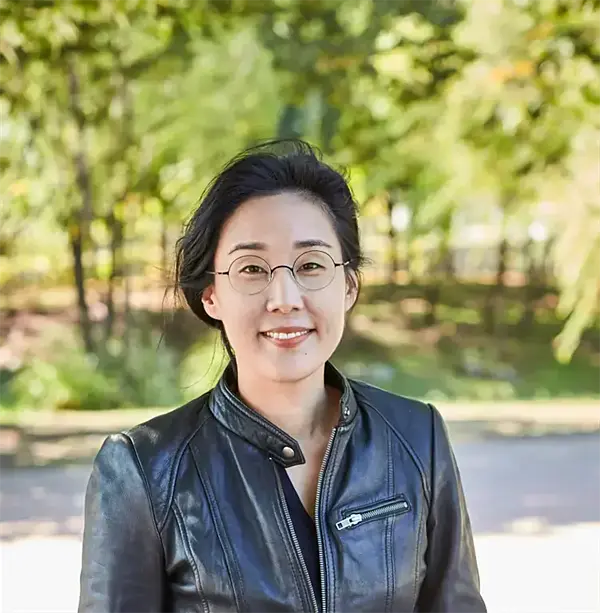
Angie Heo is an anthropologist of religion with specialties in media, economy, and politics. Her first book, The Political Lives of Saints: Christian-Muslim Mediation in Egypt (University of California Press, 2018), examines how Coptic Orthodoxy mediates social relations between Christians and Muslims in Egypt. It analyzes how material and visual cultures of saint veneration shape church-state authoritarianism, majority-minority relations, and sectarian violence. Her next book turns to the study of Protestantism and anti-communism in the Korean Peninsula. At the broadest level, it traces the Cold War’s deep and ongoing influence on the ideological and capitalist contours of Christianity in the divided Koreas. Drawing from her research in Egypt and Korea, Heo has collaborated with anthropologists, historians, and theologians interested in religion in Central and Eastern Europe and East Asia. These collaborations have resulted in two publications, Praying with the Senses (2018, edited by Luehrmann) and Religion and Borders in (Post-) Cold War Peripheries (2019, co-edited by Heo and Kormina).
This seminar is sponsored by the Liu Institute's Korea Working Group.